
10 Best PageFly Alternatives for Shopify in 2026 (Free & Paid)

PageFly is popular. That’s not the same as saying it’s right for your store.
I’ve worked with a lot of Shopify merchants who defaulted to PageFly because it came up first in a Google search or because someone in a Facebook group recommended it. Then, six months later, they’re stuck with a page builder that adds significant load time to their store, has a learning curve steeper than they expected, and costs more than they’d like at scale.
That’s usually when they start looking for alternatives.
In this guide, I’ll walk through the 10 best PageFly alternatives for Shopify in 2026. Some are direct competitors with more features. Some are lighter and faster. A couple take a completely different approach to page building altogether. The right pick depends on your store size, budget, and how you like to work.
Why Merchants Switch Away from PageFly
Before I get into the list, it’s worth naming the most common complaints I hear about PageFly. Not because PageFly is bad. With a 4.9 rating from 11,900+ reviews it’s genuinely well-regarded… but because knowing what drives people away helps you pick the right alternative.
The most common reasons I hear:
Page speed impact. PageFly injects JavaScript on your pages, and depending on how many elements you use, this can slow your store down. A one-second delay in mobile load time costs you roughly 7% of conversions according to Google and Deloitte research. For stores running paid ads, that’s a meaningful cost.
Pricing at scale. The free plan limits you to one published page. As you add more pages, the cost climbs. The unlimited plan runs $99/month, which is significant overhead if you’re in an early stage or running a lean operation.
Vendor lock-in. Pages built in PageFly are dependent on the app. Delete the app and your pages break. For merchants who want clean, portable code that lives in their theme, this is a dealbreaker.
Learning curve. The editor is powerful, but that power comes with complexity. Merchants who just want to spin up a clean landing page quickly often find PageFly’s feature set to be more than they need.
If any of those resonate, keep reading.
The 10 Best PageFly Alternatives for Shopify in 2026
1. Canvify: Best for Canva Users and Design-Forward Stores
- Website: canvify.app
- Shopify App Store: apps.shopify.com/canvify
- Pricing: $8.70/month (single plan, 14-day free trial)
- Built for Shopify: Yes
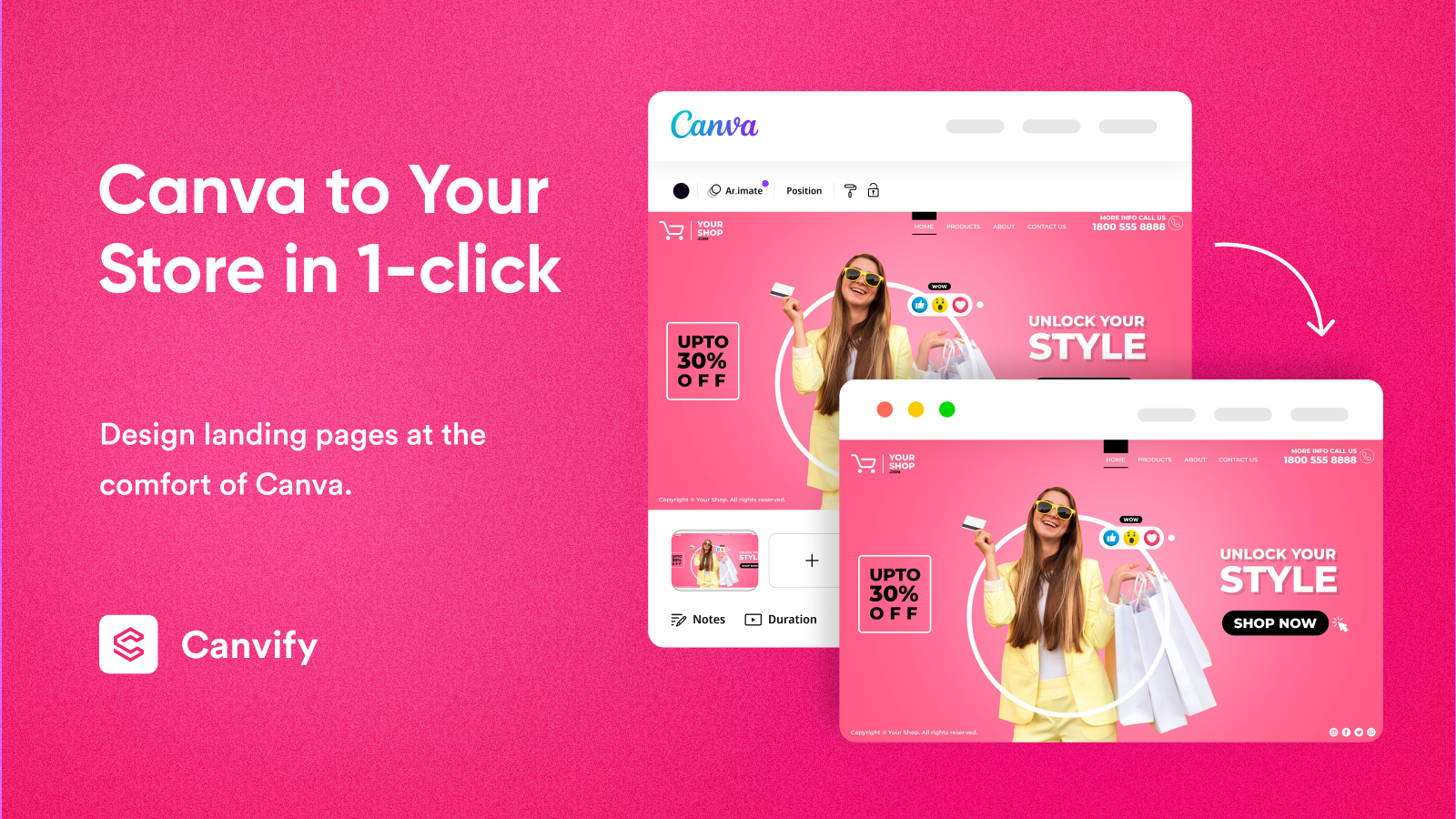
Canvify is the most distinctive alternative on this list because it does not try to replace your design process. It fits inside the one you already have.
Here’s the core idea: you design your pages in Canva, using all of Canva’s tools: AI features, animations, video, templates, brand kits, and millions of stock assets: and then Canvify imports that design into Shopify as a native page. You paste a URL and it becomes a live, mobile-responsive, SEO-indexed Shopify page. No exporting, no uploading, no reformatting.
I’ve seen this workflow change the game for merchants who already live in Canva. Instead of learning a new drag-and-drop system and fighting with rows, columns, and element stacks, they stay in a tool they already know. The learning curve is essentially zero.
What makes Canvify stand out against every other page builder:
- No new tool to learn. If you already use Canva for social graphics, product images, or email headers, Canvify is a natural extension. There’s no parallel interface to master.
- Native Shopify pages. Canvify imports as actual Shopify pages, not embedded iframes from an external server. That matters for SEO and page speed.
- Keeps all Canva features. Animations, video backgrounds, hover effects, links, all preserved after import.
- Unlimited pages for one flat fee. At $8.70/month, there are no tier upgrades, no per-page pricing, and no surprise costs as you scale your page count.
- Works with any Shopify theme. Particularly smooth with minimal themes like Dawn.
- Built for Shopify certified. This means Shopify has reviewed it for performance, design, and integration standards.
One honest note: Canvify is not a full ecommerce page builder in the way that GemPages or Shogun are. It does not have native dynamic product grids, built-in A/B testing, or add-to-cart block customization. What it does exceptionally well is brand and marketing pages: landing pages for campaigns, homepage sections, about pages, seasonal promotions, event pages, and any content-forward design where you want Canva’s creative range without the constraints of a grid-based page builder.
For those pages specifically, it is the most practical tool on the market. And at a fraction of the price.
| Feature | Canvify |
|---|---|
| Design interface | Canva (familiar, no new tool) |
| Page output | Native Shopify pages |
| Mobile responsive | Yes |
| SEO friendly | Yes |
| Animations & video | Yes (from Canva) |
| A/B testing | No |
| Pricing | $8.70/month flat |
| Free trial | 14 days |
2. GemPages: Best for Conversion-Focused Funnels
- Pricing: Free (1 page), paid from $29/month
- Shopify App Store rating: 4.8/5 (3,600+ reviews)
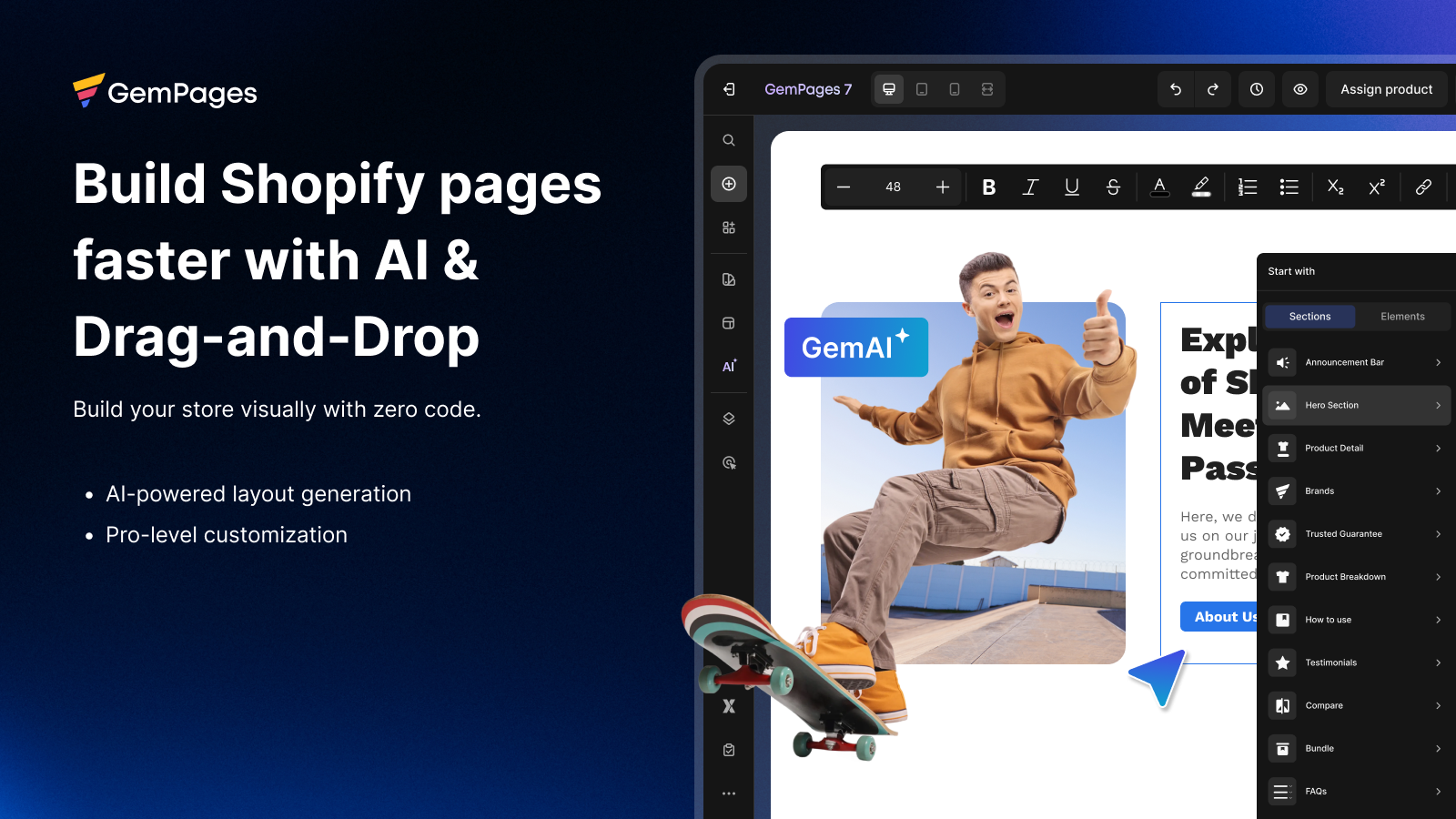
GemPages is the closest like-for-like alternative to PageFly in terms of feature depth. It has a drag-and-drop builder, 400+ templates, CRO-specific elements, and a sales funnel flow that lets you track conversions, average order value, and behavior across your custom pages.
What sets GemPages apart is its AI Image to Layout feature. Upload a screenshot or mockup of any page design, and GemPages will generate a buildable layout from it. That’s a real time-saver compared to starting from scratch in any page builder.
One meaningful difference from PageFly: GemPages edits happen in a separate interface outside the Shopify Theme Editor. Some merchants find this disorienting. If you want edits to stay within the native Shopify environment, look at Canvify or Instant instead.
GemPages is a strong pick for medium to large stores that want deep CRO control and are willing to invest in learning its feature set.
3. Shogun: Best for Enterprise and Data-Driven Teams

- Pricing: From $39/month (free trial available)
- Shopify App Store rating: 4.7/5 (3,000+ reviews)
Shogun is the enterprise-grade pick on this list. It targets established Shopify merchants and agencies who need built-in analytics, A/B testing, and detailed conversion tracking alongside their page building.
Its editor is strong, with a wide range of pre-built sections, a visual component library, and clean integration with major ecommerce tools. A/B testing is available on higher plans, which makes Shogun genuinely useful for brands that test regularly and need statistical significance before rolling out design changes.
The tradeoff is price. For smaller stores, Shogun’s plans feel heavy. The lowest tier starts at $39/month and the jump to business-level plans with A/B testing is significant. If you’re under $30K/month in revenue, the ROI math often does not work in Shogun’s favor.
Shogun is the right choice when you have the traffic volume to make A/B testing meaningful, the budget to match its pricing, and a team that will actually use the analytics features.
4. EComposer: Best for Beginners Getting Started Quickly
- Pricing: Free plan available, paid from $19/month
- Shopify App Store rating: 4.9/5 (5,000+ reviews)
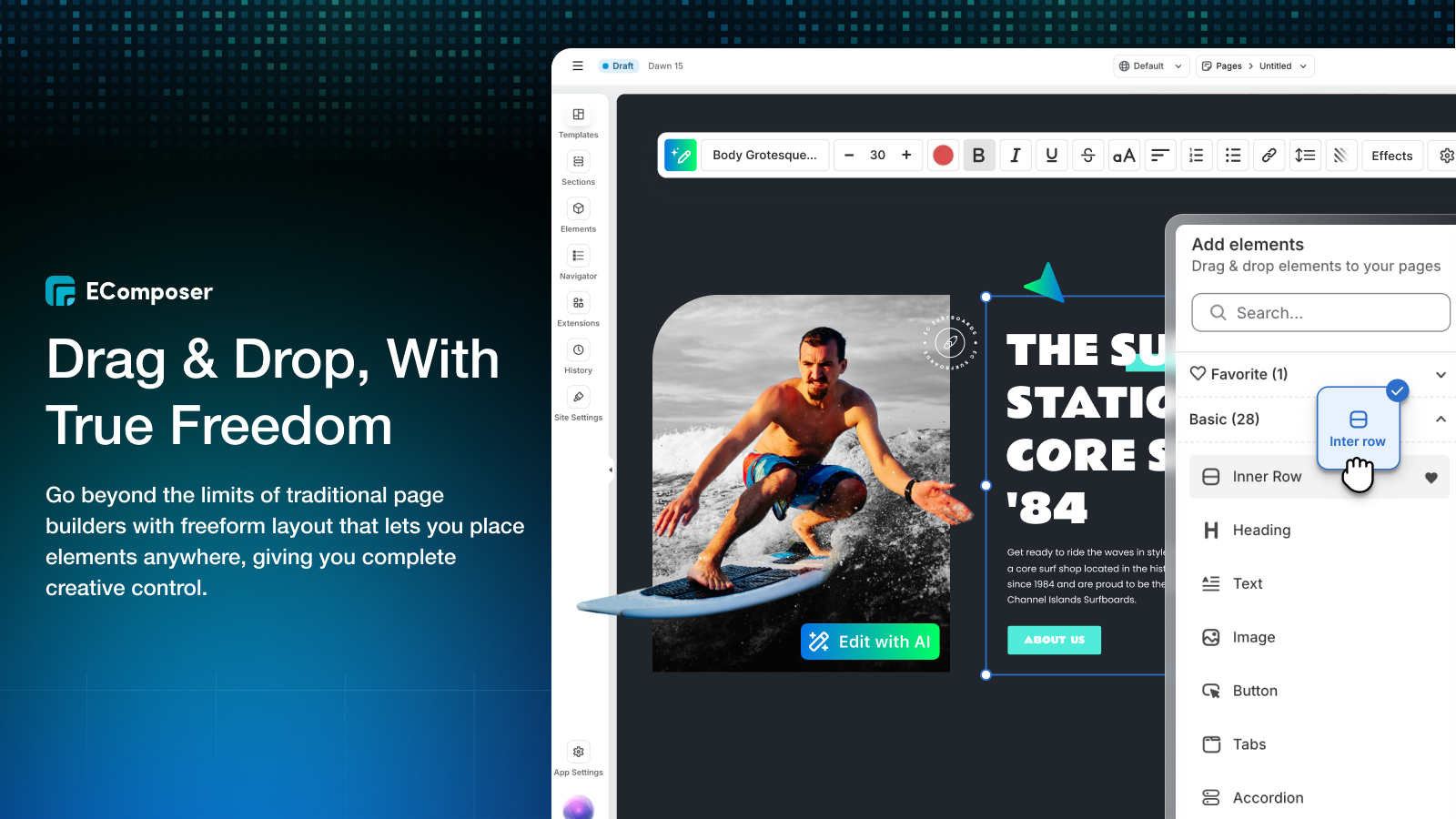
EComposer consistently gets the highest marks for ease of use among all Shopify page builders I’ve evaluated. Its setup is guided, its drag-and-drop interface feels familiar to anyone who has used the Shopify editor, and it includes an AI content generator that writes product descriptions, headings, and section copy inside the builder.
For stores just getting started with custom pages, EComposer removes most of the friction. You can have a landing page published within an hour of installing it, which is not always the case with more feature-heavy builders.
It also includes a built-in SEO audit tool that scores your pages and flags issues before you publish. That’s a useful safety net for merchants who are not SEO-heavy but want to avoid obvious mistakes.
Where EComposer starts to feel limited is at scale. Advanced merchants who want granular layout control, multi-variant testing, or complex product page customization will eventually bump into the ceiling. But for stores in their first 12-18 months, it’s one of the cleanest starting points available.
5. Instant: Best for Design Teams Using Figma
- Pricing: Free (1 page), paid from $39/month
- Shopify App Store rating: 4.9/5 (275+ reviews)
Instant has a genuinely different technical approach compared to every other builder on this list. When you publish a page with Instant, it outputs native Shopify Liquid code. Not a JavaScript overlay. Not an app-dependent block. Clean, standard Liquid that lives in your theme like any native section.
That means two things. One: pages built in Instant can be edited directly in the Shopify Theme Editor after publishing, a huge advantage for merchants who want design flexibility without permanent dependency on the app. Two: pages are as fast as anything built in a custom theme, because there’s no extra layer of app code running at render time.
Instant also has a Figma-to-Shopify plugin, which makes it the only builder on this list that fits naturally into a professional design workflow. If your team designs in Figma before building in Shopify, Instant removes the gap between mockup and live page.
The review count is lower than PageFly or GemPages, so it’s less battle-tested at very high volumes. Paid plans also jump quickly in price. But for design-forward teams and developers who want portable, performant code, Instant is the strongest technical option on the market.
6. Beae: Best for Aesthetics and Visual Polish
- Pricing: Free plan available, paid from $14.90/month
- Shopify App Store rating: 4.9/5 (1,500+ reviews)
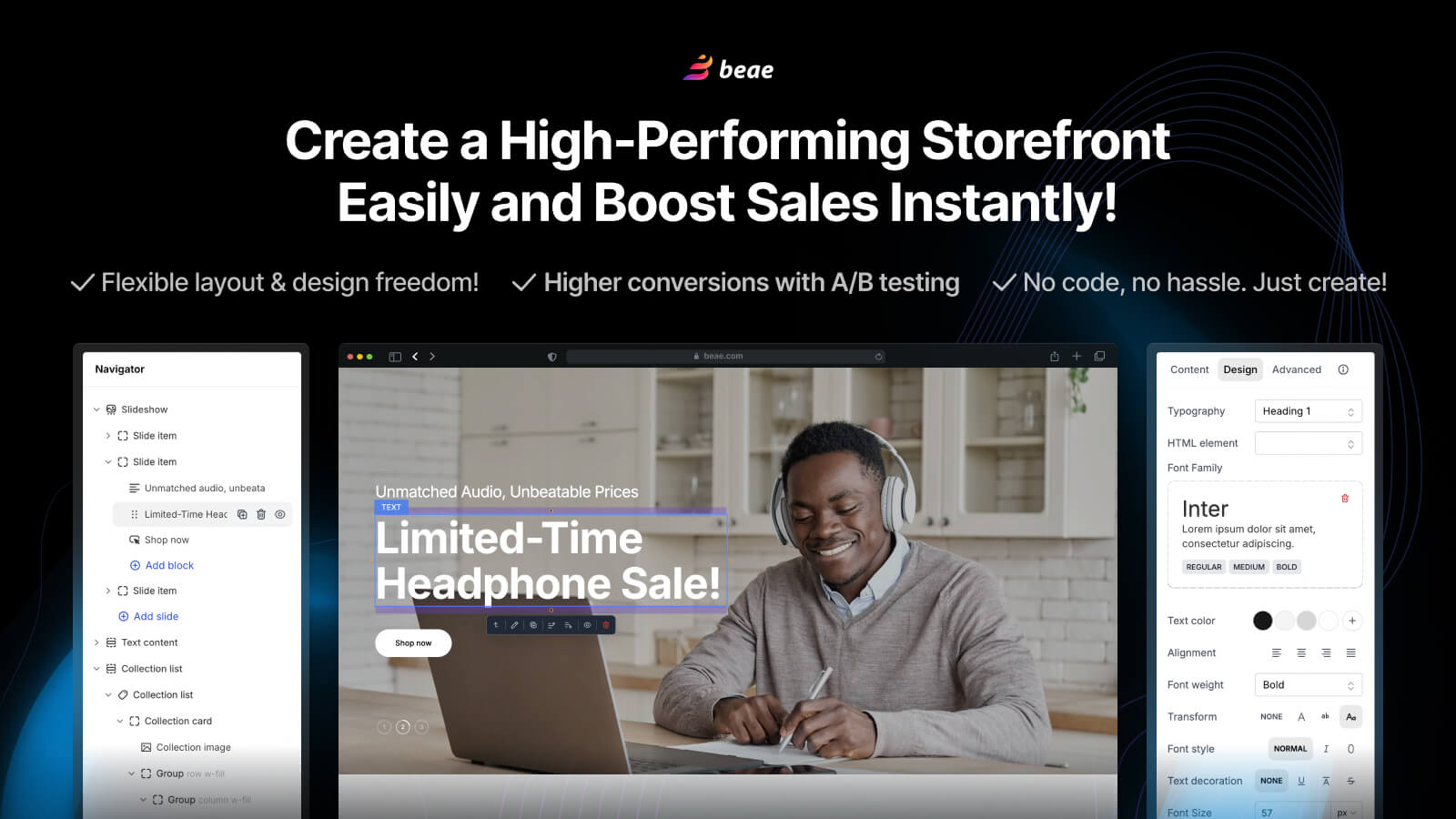
Beae (formerly Beae Landing Page Builder) has carved out a niche among merchants who care most about design quality over feature depth. Its templates are genuinely good. The layout options are clean, the typography handling is better than most builders in this tier, and the output tends to look polished without much effort.
For brands in fashion, beauty, lifestyle, or any sector where aesthetics drive purchase decisions, Beae is worth testing seriously. The price is competitive at $14.90/month for the entry plan, and the free plan is usable.
Beae does not have the A/B testing, deep analytics, or funnel-specific features of GemPages or Shogun. If you need those, look elsewhere. But if your main goal is pages that look good and build fast, Beae is a strong contender.
7. LayoutHub: Best for Getting Pages Live Quickly from Templates
- Pricing: Free plan available, paid from $14/month
- Shopify App Store rating: 4.9/5 (1,200+ reviews)
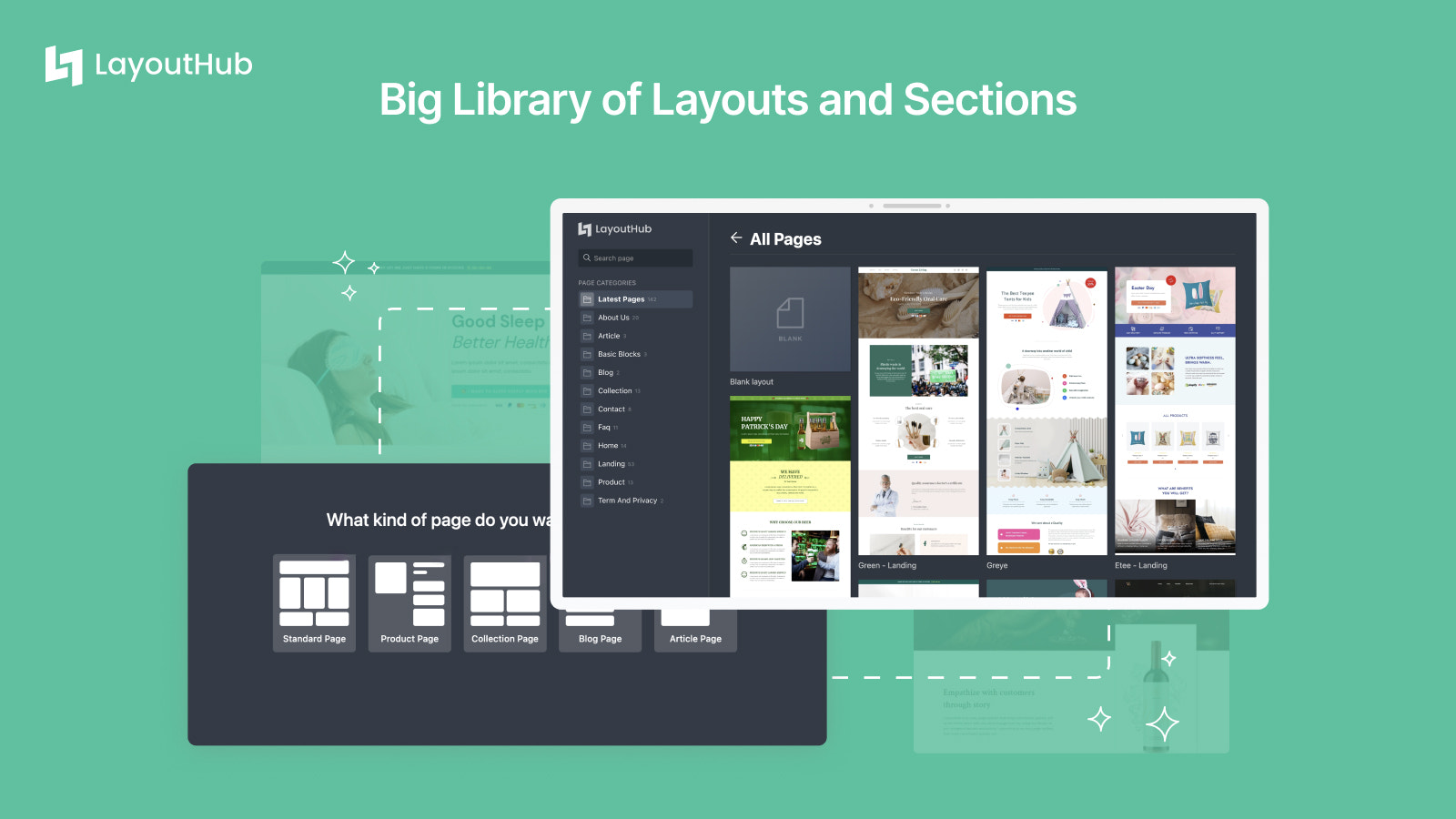
LayoutHub is template-first by design. Its library is built around ecommerce-specific layouts created by conversion professionals, which means most templates are already structured for common high-intent pages: product launches, seasonal sales, bundle offers, and coming-soon pages.
The tradeoff is creative flexibility. LayoutHub gives you less blank-canvas freedom than GemPages or PageFly, but it gets you from “I need a landing page” to “live page” faster than almost any other builder on this list.
For merchants running frequent promotions, seasonal campaigns, or product drops where speed matters more than bespoke design, LayoutHub earns its place in the stack.
8. Foxify: Best for Design Flexibility with AI Layouts
- Pricing: Free (1 page), Starter $19/month, Growth $39/month, Enterprise $99/month
- Shopify App Store rating: 4.8/5 (297+ reviews)
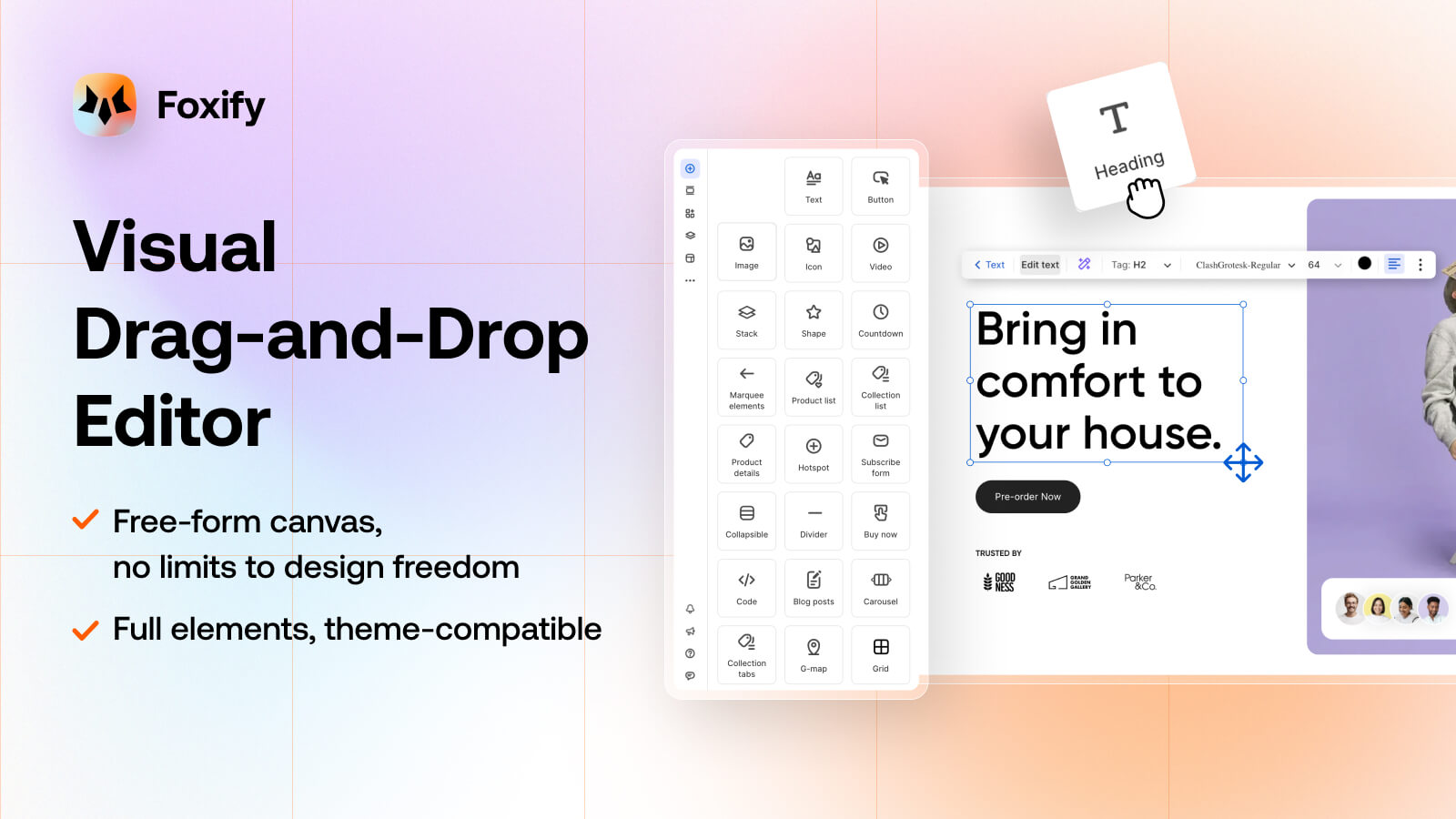
Foxify’s editor works as a canvas rather than a rigid row-and-column grid, which gives you more freedom over positioning and layout than most Shopify page builders. If you’ve felt boxed in by PageFly’s grid system, Foxify’s approach feels noticeably different.
The standout feature is AI layout generation. While other builders use AI primarily for copywriting, Foxify can generate full page layouts from a prompt or inputs. That’s a faster starting point than browsing template libraries, particularly if you’re building many pages at a time.
Foxify also bundles several conversion elements that would normally require separate apps: Ajax cart, color swatches, quick-view popups, and cross-sell widgets. On lower-priced plans, this saves you from paying for and managing multiple single-purpose apps.
9. Replo: Best for DTC Landing Pages and Ad Traffic
- Pricing: From $99/month (per seat)
- Shopify App Store rating: 4.9/5 (400+ reviews)
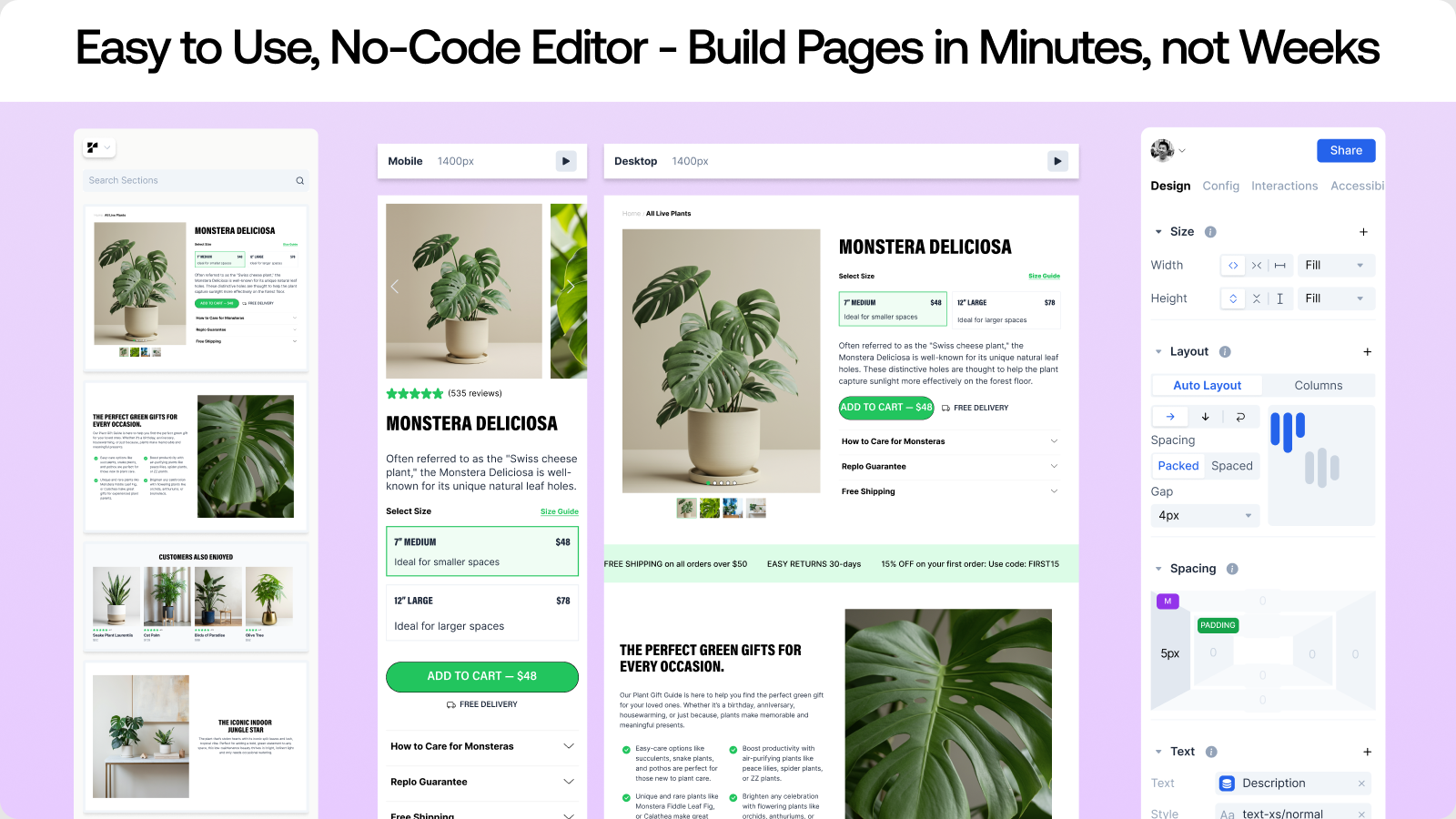
Replo is built specifically for DTC brands running paid traffic. It is the most opinionated page builder on this list: not trying to do everything, but doing one thing exceptionally well: high-converting landing pages for ad campaigns.
The template library is curated from pages that have actually performed well for DTC brands, not generic layout templates. The integration with Klaviyo, Postscript, and major analytics tools is deep and reliable.
The pricing reflects its target market. At $99/month per seat, Replo is squarely aimed at established stores with significant ad spend. For a store doing $500K/year or more with a real paid media budget, the ROI math works easily. For a $10K/month store, it’s hard to justify.
If you run serious paid traffic and your landing pages are a primary conversion bottleneck, Replo is worth evaluating seriously.
10. Section Store: Best for Extending Your Existing Theme Without a Builder
- Pricing: $9 per section (one-time), $10/month for Plus plan
- Website: section.store
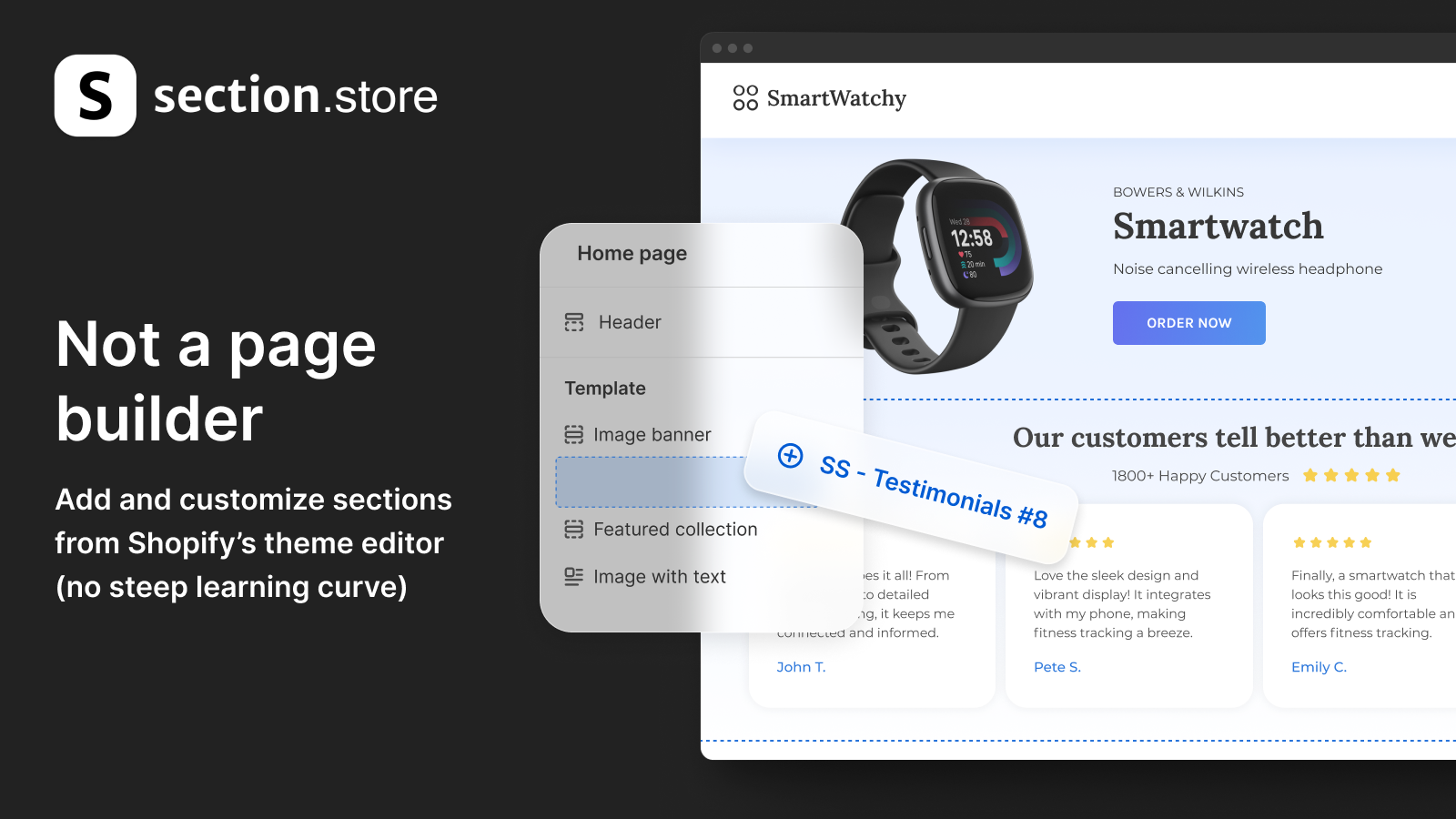
Section Store is technically not a page builder. It is a section library. And for a lot of merchants, that’s actually exactly what they need.
Instead of replacing your Shopify Theme Editor with a separate app, Section Store adds individual pre-built sections to your existing theme that you manage entirely within the native Theme Editor. You browse 730+ sections covering heroes, testimonials, FAQs, sliders, countdown timers, featured collections, and more, buy the ones you want at $9 each, and add them to your theme.
No JavaScript overlay. No separate editor. No app dependency at runtime.
This approach has a meaningful speed advantage. Because sections are native Liquid code added to your theme, there’s no app rendering layer affecting Core Web Vitals. For merchants concerned about page speed and SEO, this matters.
The tradeoff is that you’re assembling sections rather than designing freely. There’s no blank canvas. But for stores that just want a few key sections added to an otherwise solid theme, Section Store can solve the problem more cleanly and cheaply than any full page builder.
Full Comparison Table
| # | App | Best For | Free Plan | Starting Price | A/B Testing | Native Liquid Output |
|---|---|---|---|---|---|---|
| 1 | Canvify | Canva users, brand pages | 14-day trial | $8.70/mo | No | Yes |
| 2 | GemPages | CRO funnels, AI layout | Yes (1 page) | $29/mo | Yes | No |
| 3 | Shogun | Enterprise, analytics | Trial only | $39/mo | Yes | No |
| 4 | EComposer | Beginners, fast setup | Yes | $19/mo | No | No |
| 5 | Instant | Figma teams, clean code | Yes (1 page) | $39/mo | Yes | Yes |
| 6 | Beae | Design-focused brands | Yes | $14.90/mo | No | No |
| 7 | LayoutHub | Quick template launches | Yes | $14/mo | No | No |
| 8 | Foxify | Design freedom, AI layout | Yes (1 page) | $19/mo | No | No |
| 9 | Replo | DTC paid traffic | No | $99/mo | No | No |
| 10 | Section Store | Extending existing theme | No | $9/section | No | Yes |
How to Choose the Right PageFly Alternative for Your Store
Before you pick based on features alone, I’d recommend answering four questions.
What type of pages do you actually need? Most merchants don’t need a full page builder. They need 2-4 custom pages: a campaign landing page, a homepage redesign, maybe a product page upgrade. For that use case, Canvify or Section Store covers it for a fraction of the cost of a full builder. If you need full control over every page type in your store, GemPages or Shogun starts to make more sense.
Does your team already use Canva? If yes, Canvify is almost certainly the most practical route. The skill transfer is immediate, the price is low, and the output is native. You’re not learning a new tool, you’re extending a workflow you already have.
How important is page speed to your business model? If you run Google Ads or SEO-driven traffic where Core Web Vitals affect your Quality Score or rankings, page speed matters more than design features. In that case, Instant or Section Store, both of which output native Liquid without a JavaScript overlay, will serve you better than app-dependent builders.
What’s your monthly revenue? Shogun and Replo are excellent tools, but their pricing only makes sense at a certain revenue level. A $15K/month store paying $99/month for a page builder is devoting nearly 1% of revenue to a single design tool. Canvify or EComposer solve 80% of the same problems for less than $20/month.
One Tool Worth Adding Alongside Any Page Builder

Whichever page builder you choose, one thing they all lack is the ability to easily embed rich external content on the pages you build.
That’s where a tool like EmbedAny becomes genuinely useful. It lets you embed content from 800+ platforms, YouTube, TikTok, Instagram, Google Reviews, Trustpilot, Spotify, PDFs, Slides, by pasting a link. No iframe code, no developer, no configuration.
In practical terms, this means:
- Adding a TikTok customer review directly to a Canvify landing page
- Embedding a Google Review widget next to a checkout button on a GemPages product page
- Placing a YouTube product demo above the fold on a Shogun campaign page
Page builders give you the layout. EmbedAny adds the multimedia social proof and content that actually persuades someone to buy. The two work as a natural pair. You can read more about how to add social proof to Shopify and why embedded content converts better than static text.
Final Thoughts: PageFly Is Not the Default
I work with a lot of Shopify merchants who are paying for PageFly out of habit rather than necessity. When I ask them why they chose it, the honest answer is usually “it was the first one I found” or “everyone in the group uses it.”
That’s a fine reason to start with it. It’s not a good reason to stay.
If you use Canva and want branded pages without learning a new tool: Start with Canvify. At $8.70/month with no feature tiers, it covers most use cases for a fraction of PageFly’s cost.
If you need CRO funnels and template depth: GemPages is the most direct PageFly replacement.
If you’re running paid traffic at scale: Replo or Shogun, depending on your team size and budget.
If speed and portability matter: Instant or Section Store give you native Liquid output with no runtime app dependency.
The right page builder is the one that fits your store’s actual needs, not the most popular one on the app store.
For more on building high-converting pages on Shopify, check out our guide on how to embed YouTube videos in Shopify and how to add Instagram feed to Shopify.
FAQs
what is the best free pagefly alternative for shopify
The best free options are GemPages, EComposer, and LayoutHub, all offer a free plan for at least one published page. For merchants who already use Canva, Canvify offers a 14-day free trial with the full feature set at $8.70/month after, which is significantly cheaper than any comparable builder.
does canvify work as a pagefly replacement
For brand pages, landing pages, and marketing content pages, yes. Canvify imports Canva designs as native Shopify pages, SEO-friendly, mobile-responsive, and without an app dependency at runtime. It does not have dynamic product grids or built-in A/B testing, so if those features are central to your workflow, pair it with another tool.
which pagefly alternative is best for page speed
Instant and Section Store are the two best options for speed. Both output native Shopify Liquid code rather than JavaScript overlays, which means pages load like native theme sections. Canvify also performs well because pages are imported as native content. Traditional drag-and-drop builders like GemPages and Shogun add more JavaScript overhead.
is shopify’s native editor a viable alternative to pagefly
For stores that need standard pages without heavy customization, the native Shopify Theme Editor with a solid theme is often enough. Where it falls short is custom campaign landing pages, heavily branded content pages, and any layout that goes beyond what your theme’s section library offers. That’s when a page builder or Canvify becomes valuable.
can i switch from pagefly to another builder without losing my pages
Switching page builders typically means rebuilding your pages in the new editor. There is no direct migration tool between most Shopify page builders. The effort depends on how many published pages you have and how complex they are. Most alternatives offer onboarding support to help with the transition.
which pagefly alternative is best for beginners
EComposer consistently gets the highest marks for ease of use. Its guided setup, familiar interface, and AI content generator make it the most approachable starting point for merchants new to page builders. Canvify is also beginner-friendly for anyone already comfortable with Canva, there is no new interface to learn.
how much does pagefly cost compared to alternatives
PageFly’s free plan allows one published page. The paid plans start around $24/month and scale to $99/month for unlimited published slots. By comparison, Canvify is $8.70/month flat with unlimited pages, EComposer starts at $19/month, and Beae starts at $14.90/month. Section Store charges $9 per section as a one-time purchase.
does using a page builder slow down my shopify store
Yes, most page builders add JavaScript that runs on your pages, which can affect load times and Core Web Vitals scores. The impact varies significantly by builder and by how many elements you use on each page. Instant and Section Store mitigate this by outputting native Liquid code. Always test page speed before and after installing any builder.
what should i look for in a pagefly alternative
The most important factors are: whether it outputs native code (better for speed and SEO), what page types it supports, whether it integrates with your existing tools, and whether its pricing scales reasonably with your store’s growth. For teams already using Canva, design workflow compatibility is a major factor that often gets overlooked.
can i use a page builder and embedany together
Yes, and the combination is genuinely useful. Page builders give you layout control. EmbedAny adds embedded content from 800+ platforms, TikTok reviews, YouTube demos, Instagram feeds, Google Reviews, Trustpilot widgets, by simply pasting a link into any section of your store. The two tools handle different parts of the conversion stack and work well side by side.