
How to Start Dropshipping in the USA with Domestic Suppliers (2026 Step-by-Step Guide)
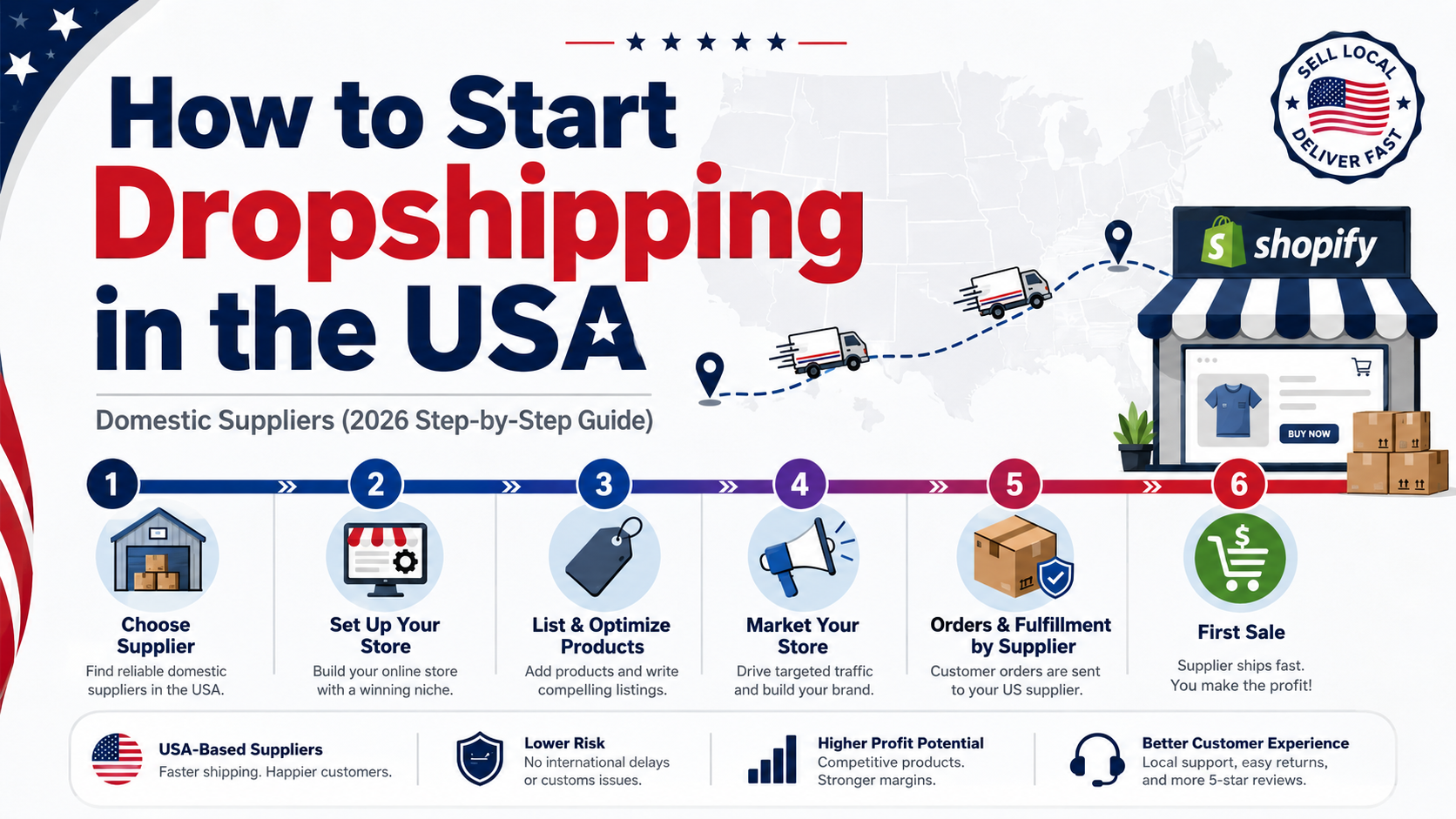
Most dropshipping guides still open with AliExpress tutorials and shipping times measured in weeks.
That advice made sense five years ago. It does not make sense now. Rising tariffs, unpredictable overseas logistics, and American buyers trained on Amazon-speed delivery have fundamentally changed what a competitive US dropshipping store looks like in 2026.
The good news is that domestic US suppliers have matured significantly. Platforms like Doba, Wholesale2B, and TopDawg give you access to hundreds of thousands of products from verified US warehouses with 2 to 5 day domestic shipping. The setup process is not complicated. What matters is doing it in the right order.
This guide walks through the full process step by step, from picking your platform to making your first sale.
Why Domestic US Dropshipping Is Worth Starting in 2026
Before the steps, the “why” matters because it shapes every decision you make.
Domestic US dropshipping has a real competitive advantage right now. Rising import tariffs and longer shipping windows from China are pushing buyers toward stores that can guarantee faster, more predictable delivery. A store with US warehouse fulfillment and a clear 2 to 5 day shipping promise is genuinely differentiated in a market where many competitors still rely on overseas suppliers.
The tradeoff is margin. US wholesale prices are higher than Chinese wholesale prices. That means you cannot compete on price alone. You have to build a store that competes on trust, speed, product quality, and the overall shopping experience. If you are willing to do that work, the domestic model is more sustainable long-term than the AliExpress race-to-the-bottom approach.
According to Shopify’s dropshipping blog, successful dropshippers focus on building a real brand rather than a generic catalog. That is especially true in 2026 US ecommerce, where buyers have seen enough generic stores to instantly recognize and distrust them.
Step 1: Choose Your US Supplier Platform
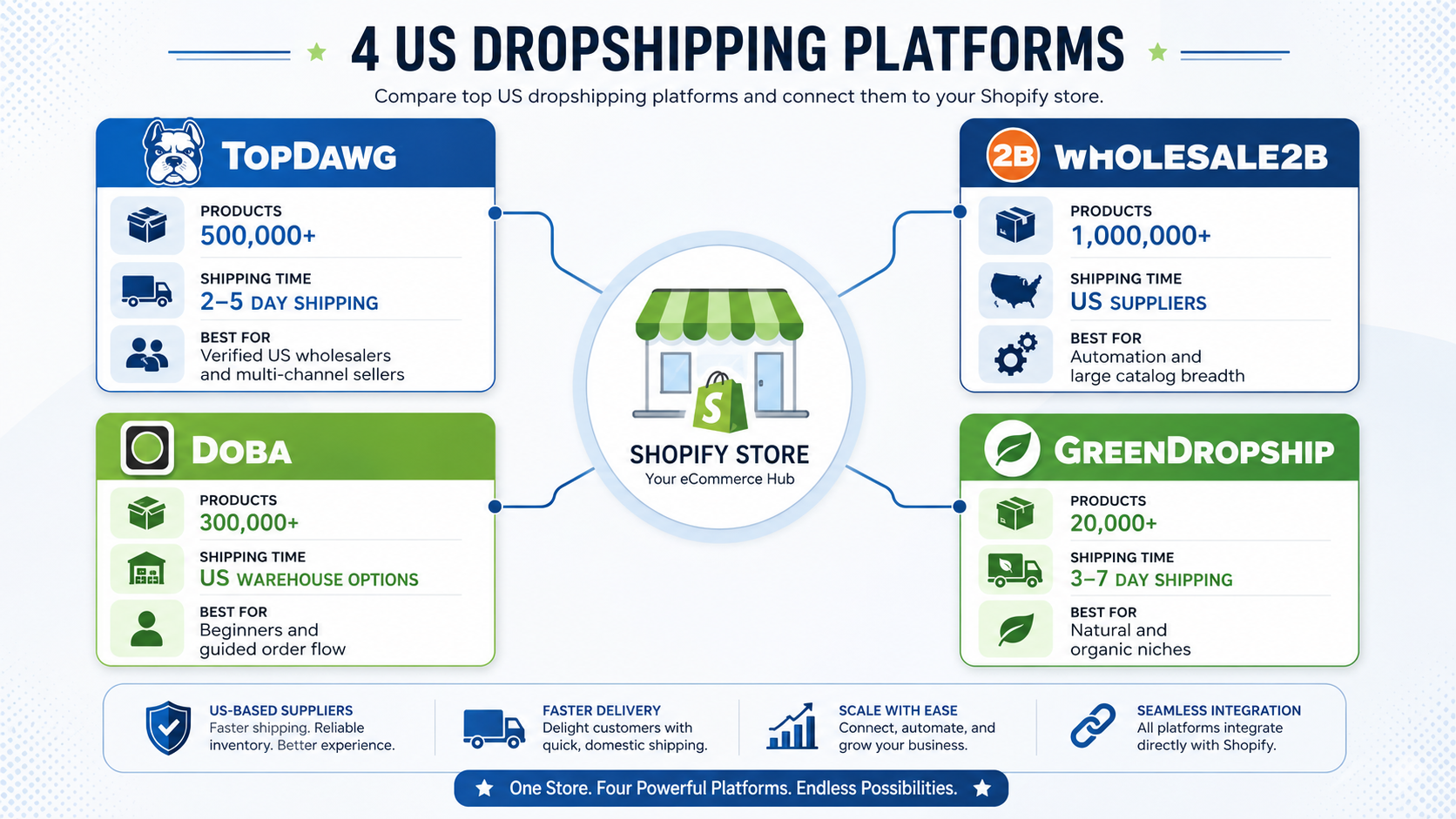
The platform you choose depends primarily on three things: your product category, how much automation you want, and how comfortable you are with the order flow.
Doba is the strongest starting point if you are a first-time dropshipper who wants to understand each step of the order process. The platform is explicit about the workflow: your customer pays you first, then you go into Doba, pay the supplier, and the supplier ships the order. That clarity is genuinely useful when you are learning. Doba connects over 200,000 plus retailers with 1,000 plus vetted suppliers and 300,000 plus products.
Wholesale2B is the right choice if you want maximum catalog breadth with minimal manual steps. Over 1 million products across 100 plus categories with automated sync and unified order management. Once set up, orders route without you manually approving each one.
TopDawg is the strongest option for multi-channel sellers who want verified US wholesalers specifically. 3,000 plus verified US suppliers, 500,000 plus products, and integrations with Shopify, Amazon, eBay, Walmart, and WooCommerce from one account. The full TopDawg review covers the verification model and subscription structure.
GreenDropShip is worth considering if your niche is natural, organic, or health and wellness products. The catalog covers 20,000 plus SKUs from 800 plus US brands with warehouses in California, Illinois, and Pennsylvania. Be aware that real seller reviews on both Trustpilot and the Shopify App Store have documented fulfillment and support issues, so test carefully before scaling.
For most beginners building a broad US Shopify store, I recommend starting with either Doba or Wholesale2B while you learn the fundamentals. The Wholesale2B vs Doba comparison breaks down the differences in detail.
Step 2: Set Up Your Seller Account
Once you have chosen your platform, registration is straightforward on all four options.
A few things to do during setup that most beginners skip:
Read the billing terms before upgrading. Especially on annual plans. Doba, Wholesale2B, and TopDawg all use tiered subscription models. Monthly plans give you flexibility while you test. Annual plans save money but lock you in. Start monthly.
Set up a dedicated business bank account. Even if you are a sole proprietor starting small, keeping business revenue and expenses separate from day one saves you significant accounting pain later.
Get a resale certificate for your state. Most US wholesale suppliers require a resale certificate (sometimes called a reseller permit or seller’s permit) to access wholesale pricing without paying sales tax on your inventory purchases. The process varies by state but is generally straightforward and free or low-cost.
Save a valid payment method on file. Your supplier platform will charge you when orders need to be fulfilled. Make sure the payment method is current before orders start coming in.
Step 3: Research Products With US Market Demand
Product research for a domestic US store follows a different logic than AliExpress product hunting.
You are not looking for the cheapest trending items. You are looking for products with:
- Consistent US buyer demand, not just seasonal spikes
- Healthy margins after US wholesale cost, shipping, and platform fees
- Low return likelihood (avoid electronics and sizing-dependent apparel to start)
- Clear differentiation from what is already on Amazon at a lower price
Categories that consistently work well in US domestic dropshipping:
- Pet supplies (strong repeat purchases, high buyer loyalty)
- Home and garden (seasonal but high AOV)
- Health and wellness (repeat-purchase habit categories)
- Fitness equipment and accessories
- Outdoor and lifestyle gear
Use Google Trends to verify that demand for specific product categories is stable rather than spiking-then-crashing. Check Amazon Best Sellers to understand what is actually moving in each category. Then find the equivalent in your platform’s catalog.
One practical filter I always use: search for products where the US wholesale price allows for a retail price that is at least 2x cost and still competitive in the market. Thin margins at launch leave no room for paid advertising, returns, or platform fees.
Step 4: Build Your Shopify Store
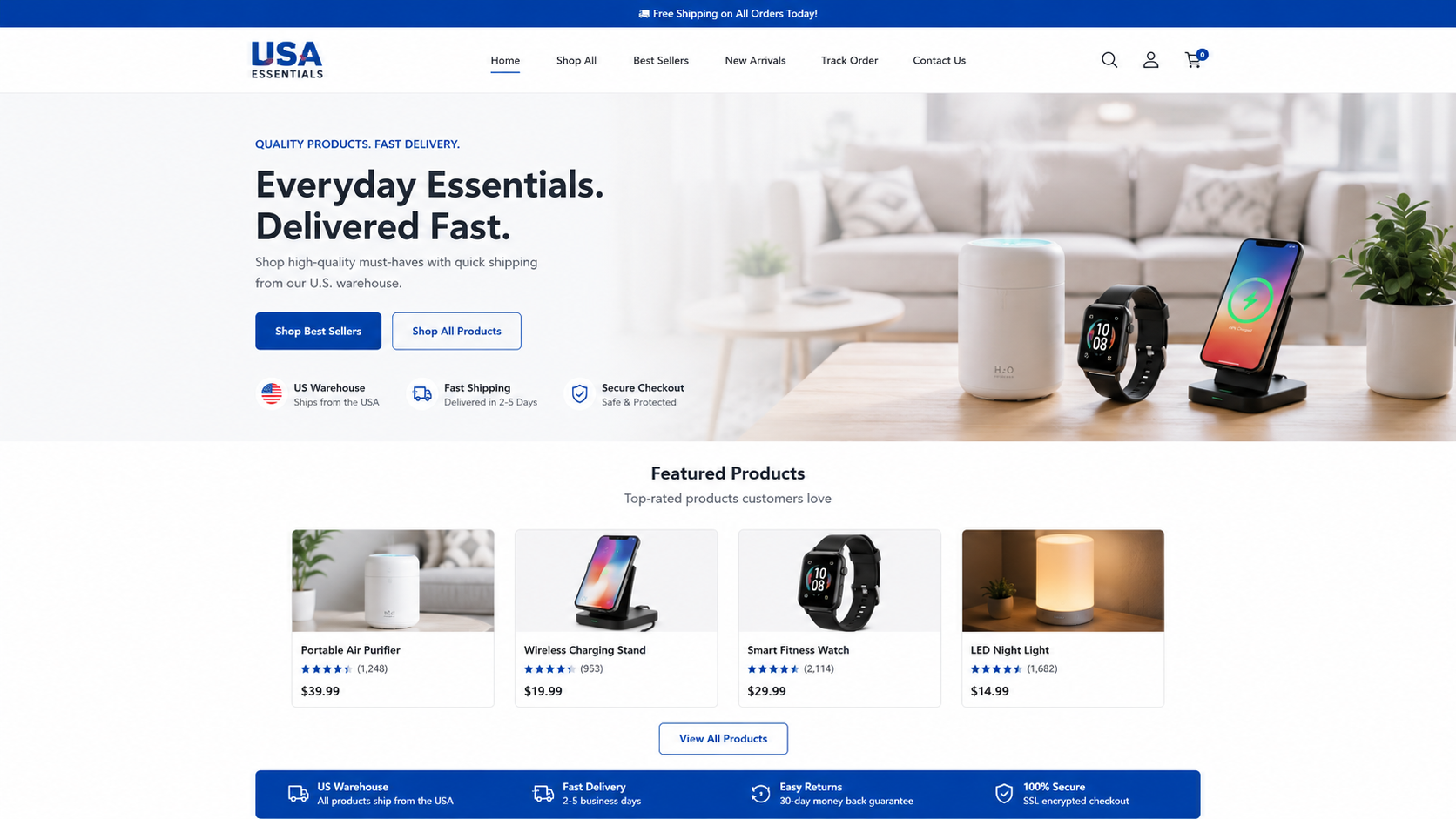
This is the step most beginners rush and most stores suffer for it.
A default Shopify theme with a logo dropped in the header does not look like a real brand. American buyers who shop online regularly recognize a low-effort store immediately and they leave.
Your store needs to communicate three things instantly: what you sell, why you are trustworthy, and how fast it ships. Everything else is secondary.
Design the store to match your product category. If you are selling home goods, the store should feel like a home brand. If you are selling pet products, it should feel like a store a pet owner built. Generic themes undermine that positioning.
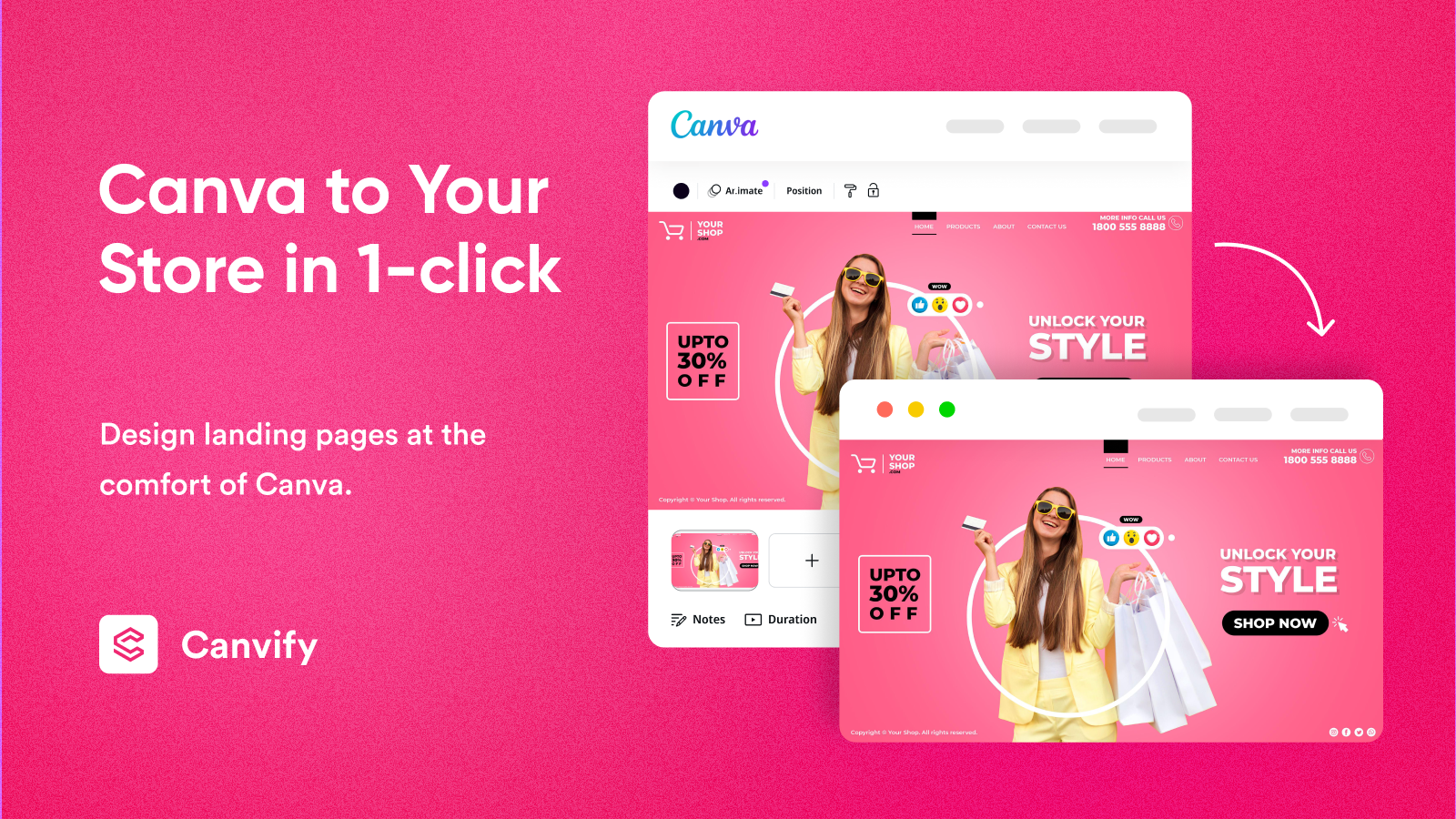
For a domestic US store, I use Canvify to make the design match the product category before the first ad goes live. A pet store needs different sections than a wellness store, and a home goods store needs different imagery than an electronics catalog. Designing those pages in Canva and publishing them through Canvify gives you native Shopify pages with the shipping promise, trust blocks, and category story arranged around the exact supplier niche you chose. Canvify’s template library has starting layouts for lifestyle, home, and product-focused stores.
What your store must have before launch:
- A clear value proposition in the hero section (what you sell, why it is worth buying from you)
- Your US shipping promise visible on the homepage and product pages
- A returns policy page that is clear and linked from the footer
- At least five products with complete descriptions, real pricing, and quality images
- A contact page with a real way to reach you
Step 5: Import Products and Sync Inventory
Once your store is built, connect your chosen supplier platform and import your first product set.
Most platforms including Doba and Wholesale2B offer one-click product import with descriptions, pricing, and images included. This is useful for getting started but I always recommend rewriting the product descriptions. Default supplier descriptions are generic and often identical across multiple stores. Search engines treat duplicate content poorly and buyers can tell when copy was written by a catalog system rather than someone who knows the product.
For each product you list:
- Rewrite the description in your brand voice
- Set a retail price that reflects your margin needs (not just the suggested retail)
- Verify the current inventory status before publishing
- Add any category-specific content (sizing guides, care instructions, technical specs)
Set up automatic inventory sync before going live. Selling an out-of-stock product is one of the fastest ways to destroy customer trust and trigger chargebacks.
Step 6: Market to American Buyers
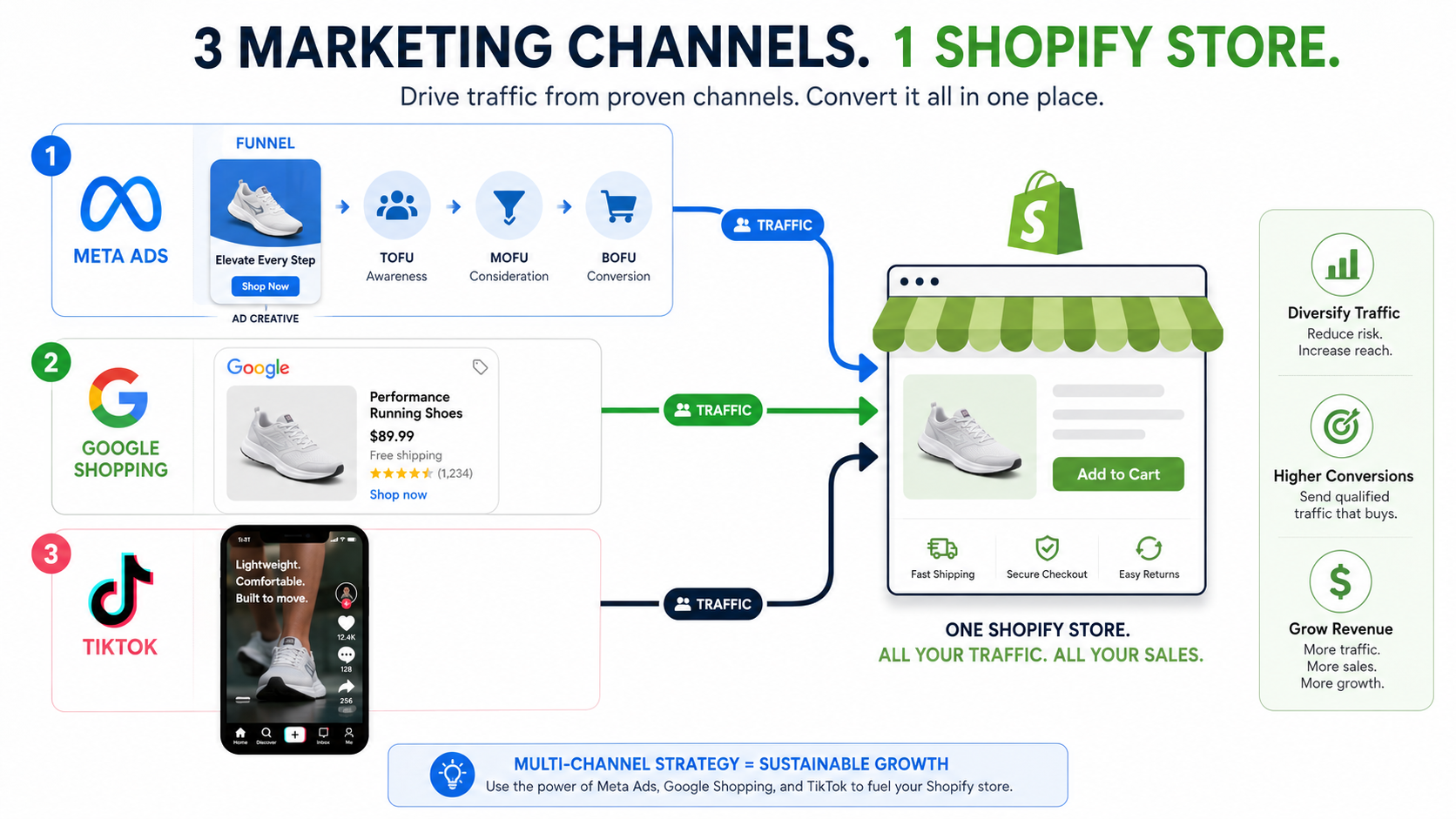
US buyers are on multiple channels and each one requires a different approach.
Meta (Facebook and Instagram): Still the most scalable paid channel for US dropshipping. Works best for visually strong product categories (home, lifestyle, fashion, pet). Start with a small daily budget, test three to five ad creatives per product, and optimize based on add-to-cart and purchase data before scaling spend.
Google Shopping: Captures buyers who are already searching for specific products. Higher purchase intent than social. Good for products where buyers search by product name or category rather than discovering through impulse. Requires a Google Merchant Center account linked to your Shopify store.
TikTok: Growing fast in the US for younger demographics. Works best for products that have visual appeal and a story to tell. Organic TikTok reach is still significant for the right product categories. Pair organic content with TikTok ads once you have identified what resonates.
Email from day one. Build an email list starting with your first visitor. A basic welcome sequence and abandoned cart flow recovers a meaningful percentage of potential lost revenue that paid acquisition cannot recapture.
A note on organic content: US dropshipping stores that invest in product content, buyer education, and category-relevant blog posts build sustainable traffic that does not disappear when paid ad budgets run out. It takes longer, but the compounding effect is real.
Step 7: Handle Orders Through Doba or Wholesale2B
Once orders start coming in, the process depends on which platform you are using.
On Doba: You receive the order in your Shopify store. Log into Doba, locate the order, pay the supplier, and the supplier processes and ships. The Doba Help Center covers this flow explicitly in their tutorials. It is more manual than fully automated platforms but gives you full visibility over each transaction.
On Wholesale2B: The order management is more automated. Wholesale2B handles supplier communication and fulfillment once an order comes in. You pay Wholesale2B through the unified billing rather than managing individual supplier payments.
On TopDawg: Order routing is automated through the Shopify integration. Real merchant reviews describe order processing as easy to manage without unnecessary complications.
For any platform: check tracking within 24 to 48 hours of an order being placed to confirm it has moved to processing. If an order sits without movement, contact your platform’s support immediately rather than waiting for the customer to ask where their package is.
Step 8: Embed Trust Signals and Product Content Into Your Store
US buyers are experienced online shoppers. They look for signals that tell them whether to trust your store before they complete a purchase.
The highest-impact trust signals for US domestic dropshipping stores:
Real product videos. A 30-second video of the product being used in a real setting does more conversion work than five bullet points of features. If your supplier has a YouTube product demo, that belongs on your product page.
I use EmbedAny to add product-specific trust content to Shopify pages by pasting the URL. A TopDawg supplier demo, a Doba product video, a Wholesale2B usage clip, or a TikTok from an early customer can sit beside the buy button instead of being buried on a social feed. EmbedAny is listed as a Built for Shopify app, supports 800 plus platforms, and the first few embeds are free, which is useful when you are validating the first 10 to 20 products.
Customer reviews. Even three to five genuine reviews from early buyers significantly improves conversion rate for buyers coming from paid ads. EmbedAny also lets you embed review widgets from external platforms by pasting the URL, so review proof can live on the same domestic-shipping product page that buyers are evaluating.
Your US shipping promise, prominently displayed. Put it on product pages, in the cart, and in the checkout. “Ships from US warehouse in 2 to 5 business days” is a trust signal specific to domestic dropshipping that you should make impossible to miss.
A clear returns policy linked from product pages. Do not just put it in the footer. Link to it from product pages with anchor text like “Easy 30-day returns.”
Step 9: Handle Returns Correctly
US ecommerce has one of the highest return rates globally, particularly for apparel, electronics, and home goods. Planning for returns is not pessimistic. It is just realistic.
For Doba and Wholesale2B, returns typically route back through the platform to the original supplier. Understand the specific returns process for each platform before your first return request comes in, not after.
For TopDawg, most products can be returned within 30 days with an RMA. Verify the specific supplier’s policy before listing their products in high-return categories.
In your store, make the returns process easy and visible. US buyers who trust that returning something will not be a nightmare are significantly more likely to buy in the first place.
Final Thoughts: Start Small, Validate, Then Scale
The single most effective thing I can tell a US domestic dropshipping beginner is this: do not try to launch with 500 products on day one.
Start with 10 to 20 carefully chosen products in one focused category. Build the store properly around that niche. Get your first 10 to 20 sales and verify that your supplier, your order flow, and your returns process all work. Then scale.
A focused store that executes well on a narrow product selection will always outperform a wide catalog store with a weak execution. US buyers respond to specialists, not generalists.
For detailed coverage of the specific platforms mentioned in this guide:
- Best US Dropshipping Suppliers Overview
- TopDawg Full Review
- GreenDropShip Review (Natural and Organic)
- Wholesale2B vs Doba Comparison
FAQs
how much money do i need to start dropshipping in the usa
The baseline cost is your Shopify subscription (starting at around $39 per month), your supplier platform subscription (varies by platform, Doba starts at $29.99, Wholesale2B varies by plan), and a domain name. Initial setup can be done for under $150. Add a paid advertising budget once your store is live and tested.
do i need to register a business to dropship in the usa
Not strictly required to start, but strongly recommended. A registered LLC or sole proprietorship provides legal protection, makes it easier to open a business bank account, and is required by most wholesale suppliers for a resale certificate. The cost and process vary by state but is generally under $100 and straightforward.
is us dropshipping more competitive than aliexpress dropshipping
Different competition, not more or less. AliExpress stores compete on price and product novelty. US domestic stores compete on speed, trust, and brand quality. The domestic market is less saturated with generic stores precisely because the margins are thinner and require more effort to build a real brand.
what is the best niche for us dropshipping in 2026
Pet supplies, home and garden, health and wellness, and fitness accessories are consistently strong. Avoid categories where Amazon dominates on price (basic electronics, commodity household goods) and categories with very high return rates (sizing-dependent apparel, fragile items) until you have fulfillment experience.
how do i handle taxes for us dropshipping
This varies by state. Generally you need to collect sales tax from customers in states where you have nexus (physical presence or economic activity above certain thresholds). Shopify has a built-in tax calculator that handles most US states automatically. Consult a US accountant for specifics on your situation.
can i run a us dropshipping store from outside the usa
Yes, many international sellers run US-focused Shopify stores using domestic US suppliers. You will need a US bank account or a payment processor that works cross-border, and you will still need to comply with US consumer protection laws for your US customers. Shopify Payments has country-specific availability so check the requirements for your country.
how do i get my first sale with us domestic dropshipping
Paid advertising (Meta or Google Shopping) is the fastest route to first sales. Create a small test budget, run ads to your best two or three products, and optimize based on what people actually click and buy. Organic channels (TikTok, Instagram content) take longer but build more sustainable traffic over time.