
Best Jewelry Dropshippers for Shopify Stores in 2026 (Complete Guide)
 Abdullah Shahid
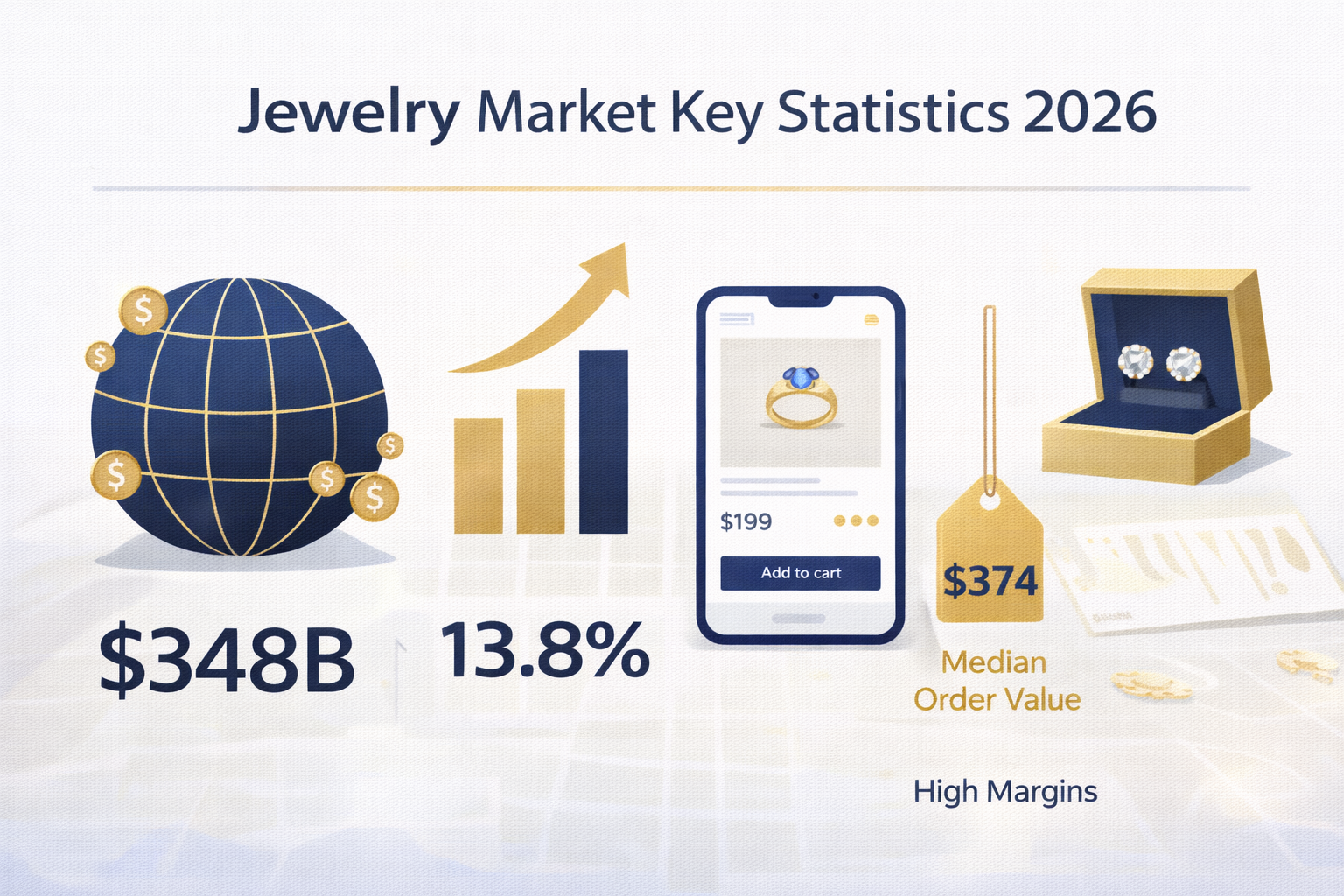
The global jewelry market hit $348 billion in 2025. Online jewelry sales are growing at 13.8% annually, four times faster than clothing, according to McKinsey. And yet, the average jewelry ecommerce store converts just 1.19% of its traffic.
That gap between market size and actual store performance is the real opportunity.
Jewelry remains one of the highest-potential niches in dropshipping for a simple reason: it sells on emotion. People buy it for love, identity, milestones, and self-expression. When you match the right product with the right audience at the right moment, the margin almost doesn’t matter because the perceived value of a well-branded piece is always higher than its cost to source.
I’ve worked with enough Shopify stores to know that most jewelry dropshippers don’t fail because of bad products. They fail because of the wrong suppliers, vague niches, and product pages that look like a hundred other stores. This guide is the one I wish existed when I started.
I’ll cover the best jewelry dropshippers for Shopify, what’s actually selling in 2026, what customers love, how to build a store that converts, and how to use content to close the trust gap that kills most jewelry sales.
Why Jewelry Is Still One of the Best Dropshipping Niches in 2026
Let me give you the numbers before the strategy.
The global jewelry market is projected to reach $394 billion by the end of 2026, growing at a CAGR of 4.58% through 2031, according to UCFS industry research. Online jewelry specifically is on a steeper trajectory, expanding at 13.8% annually, a rate that dwarfs brick-and-mortar retail’s 5% growth.
The median online jewelry order in 2026 has risen to $374, according to a Shopify Commerce Trends report analyzing over 4,200 global jewelry retailers. Personalized pieces push that figure even higher. Customized and engraved items command a median order value of $527, a 41% premium over standard products. That’s not a trend. That’s a structural shift in what people are willing to pay for jewelry that feels made for them.
Here’s why jewelry works so well for dropshipping:
High perceived value. A piece that costs $12 to source can retail for $45-$90 with the right branding and presentation. Gross margins in jewelry dropshipping typically run 60-85%, though net margins after ads, fees, and returns settle at 10-30%.
Small, light, cheap to ship. A necklace fits in a padded envelope. International shipping is accessible. Shipping costs rarely eat into margins the way furniture or electronics do.
Visual and emotional. Jewelry photographs beautifully. It performs on Instagram, TikTok, Pinterest, and YouTube. And because people buy it for emotions, anniversaries, self-treats, gifting, purchase intent is often high when someone arrives at your store.
Repeat buyers. Jewelry customers build collections. A customer who buys a minimalist gold ring often returns for matching earrings, a layered necklace, or a birthday gift. Customer lifetime value in jewelry consistently exceeds single-purchase categories.
According to McKinsey, consumers ranked jewelry as the top category for long-term value, ahead of handbags and accessories by 15 percentage points. Buyers are not buying disposable costume pieces. They’re buying things they intend to keep.
What’s Hot Selling in Jewelry in 2026
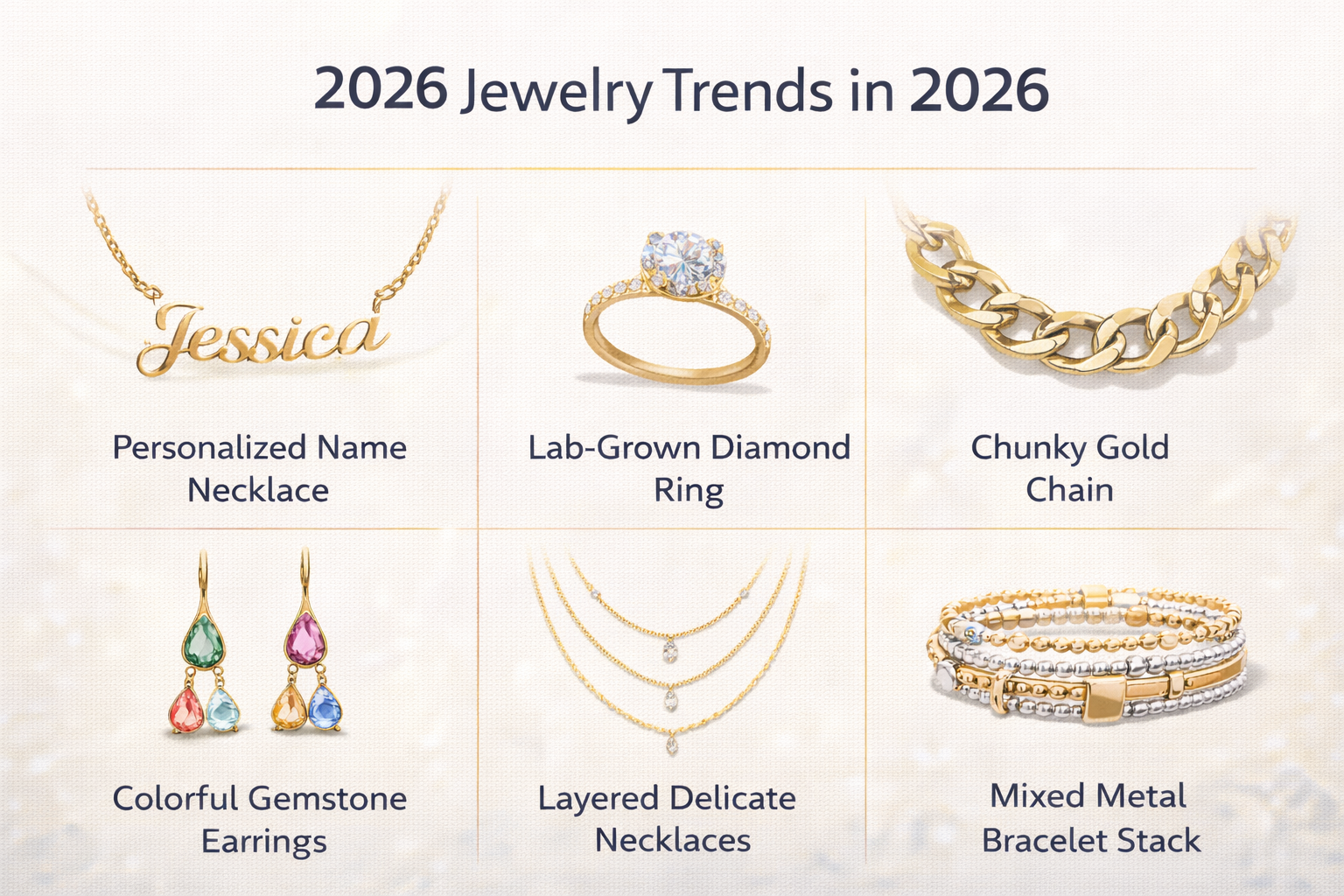
Before you pick a supplier, know what you’re selling. The jewelry categories performing best in 2026 are clear and they’re moving faster than most niches.
Personalized and custom jewelry. This is the single biggest opportunity. Name necklaces, birthstone rings, initial pendants, engraved bracelets, zodiac charm pieces, all are outperforming generic fashion jewelry. The personalized jewelry market is growing at a CAGR of 8.4% and personalization has been shown to drive an 88% conversion uplift in retail campaigns. If your supplier does not offer customization, you are leaving meaningful revenue behind.
Lab-grown diamonds. The shift from niche to mainstream is complete. Signet Jewelers reports that lab-grown diamond fashion pieces priced below $1,000 have increased at least threefold year-over-year. 84% of US consumers aged 25-60 are now aware of lab-grown diamonds, per The Plumb Club 2025 survey. This is a mainstream buyer, not a fringe one.
Chunky statement pieces. Who What Wear identifies sculptural cuffs, bold earrings, oversized hoops, and thick chain necklaces as the defining jewelry aesthetic of 2026. Quiet minimalism had its moment. Now pieces do the talking. Chunky silver and gold chains, wide cuff bangles, and dramatic statement earrings are dominating TikTok and selling fast.
Layered necklace sets. The layering trend is strong and growing. Shoppers want pieces that work together, mixed chain lengths, varying metal tones, paired pendant styles. Sell curated sets rather than singles. A two or three-piece layering set consistently outperforms individual pieces on AOV.
Colored gemstones. Emeralds, sapphires, rubies, tourmalines, and morganite are having a significant moment, especially as engagement ring alternatives or statement pendants. Colored stones photograph beautifully for social content and sell well at mid-range price points.
Sustainable and ethical jewelry. 78% of Americans consider ethical sourcing when buying jewelry, according to Jewel360. Lab-grown diamonds, recycled metals, and transparent sourcing are no longer niche differentiators. They are expected by a growing segment of buyers. If your supplier can speak to this, use it.
Ring stacking. Bold, chunky, mixed-metal, sculptural. The stacking trend turns one buyer into multiple pieces per transaction. Curated ring sets, three or five stackable bands, are a clean AOV play.
By product type, rings hold the largest market share at 33.9%, driven by the evergreen engagement and wedding market. Necklaces are the fastest-growing segment at 6.0% CAGR through 2033, fueled by the layering trend and personalization demand.
What Customers Actually Love (and What Kills Sales)
Here is what the data says about jewelry buyers in 2026.
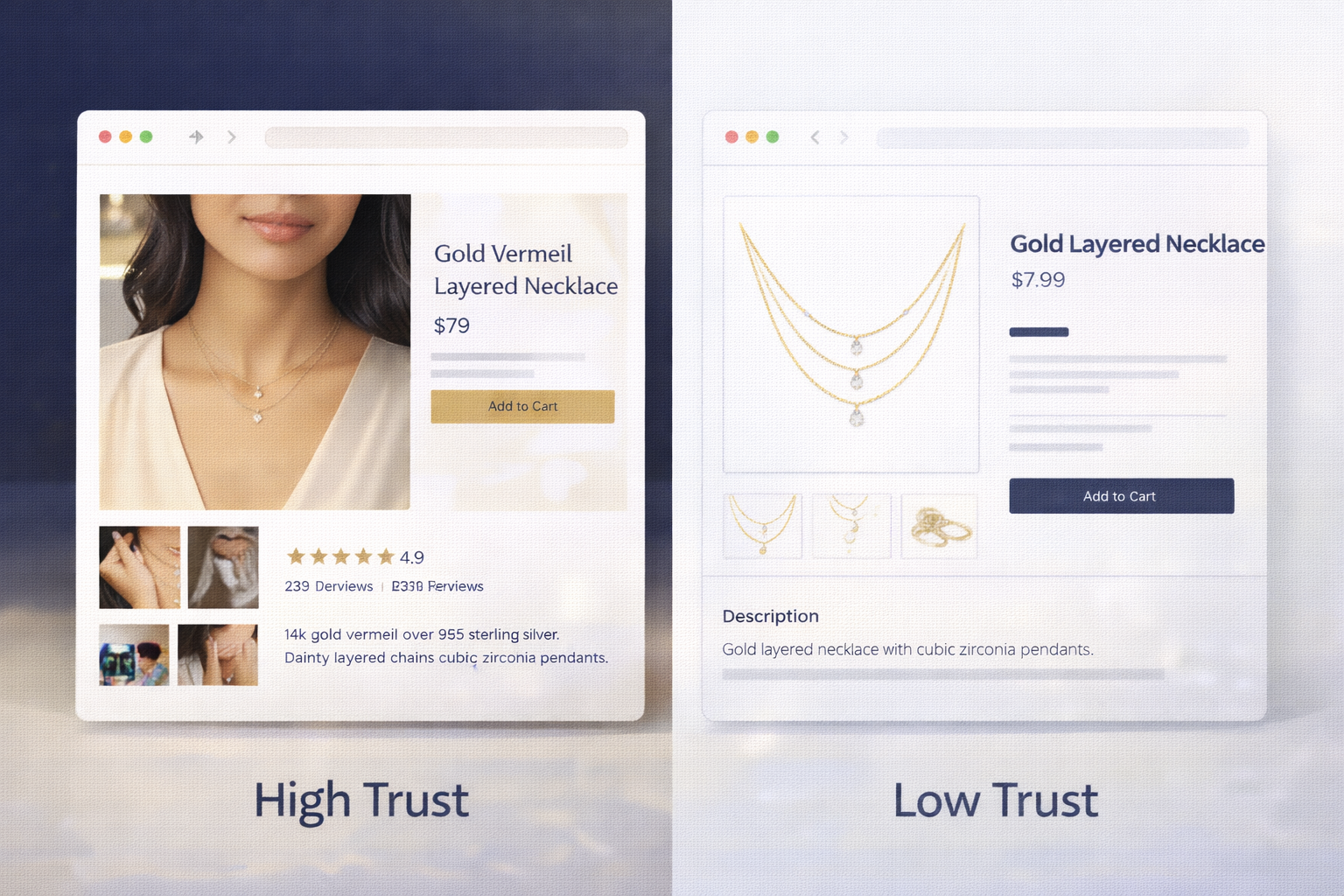
60% of online jewelry buyers hesitate to purchase when they cannot see a piece worn in context. A white background product photo is necessary but not sufficient. Customers need to see scale, drape, how the piece sits against skin, how it catches light. Static flat-lay images alone do not close the sale for a high-consideration purchase.
28% of Gen Z jewelry discovery now happens via social platforms. Signet Jewelers directs more than one quarter of its entire marketing budget to social media. If you are running a jewelry store without active social content, you are invisible to the fastest-growing buyer segment.
Personalized jewelry commands a median order value 41% higher than standard pieces. This is the single easiest lever for lifting revenue without acquiring new traffic.
What consistently kills sales in jewelry stores:
Generic product pages. If your product page is identical to ten other stores selling the same item from the same supplier, you have no competitive advantage. Better copy, lifestyle images, and social proof are not optional extras.
No size or scale reference. A photo of a necklace in isolation tells buyers nothing about how it will look on them. Include an on-model image on every listing. This alone reduces hesitation meaningfully.
Slow shipping with no communication. Jewelry buyers frequently purchase gifts. A 25-day shipping estimate from an overseas supplier will lose the sale or generate a dispute. Know your timelines and state them clearly.
No social proof. Reviews with customer photos are the most persuasive element on a jewelry product page. Without them, visitors assume the quality does not match the photos.
Best Jewelry Dropshippers for Shopify in 2026
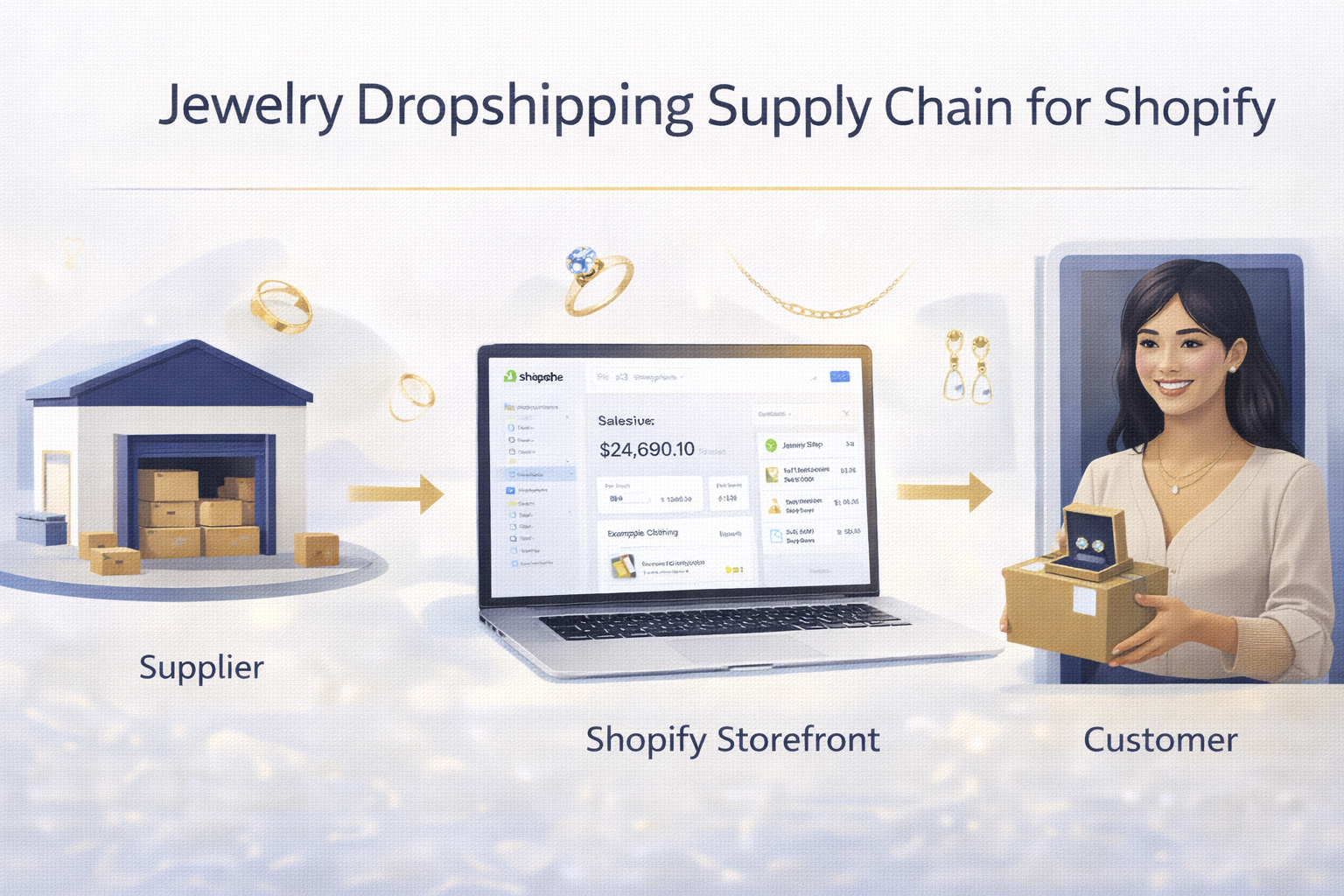
Here are the top suppliers to consider for a Shopify jewelry store in 2026, organized by who they’re best for.
1. Spocket
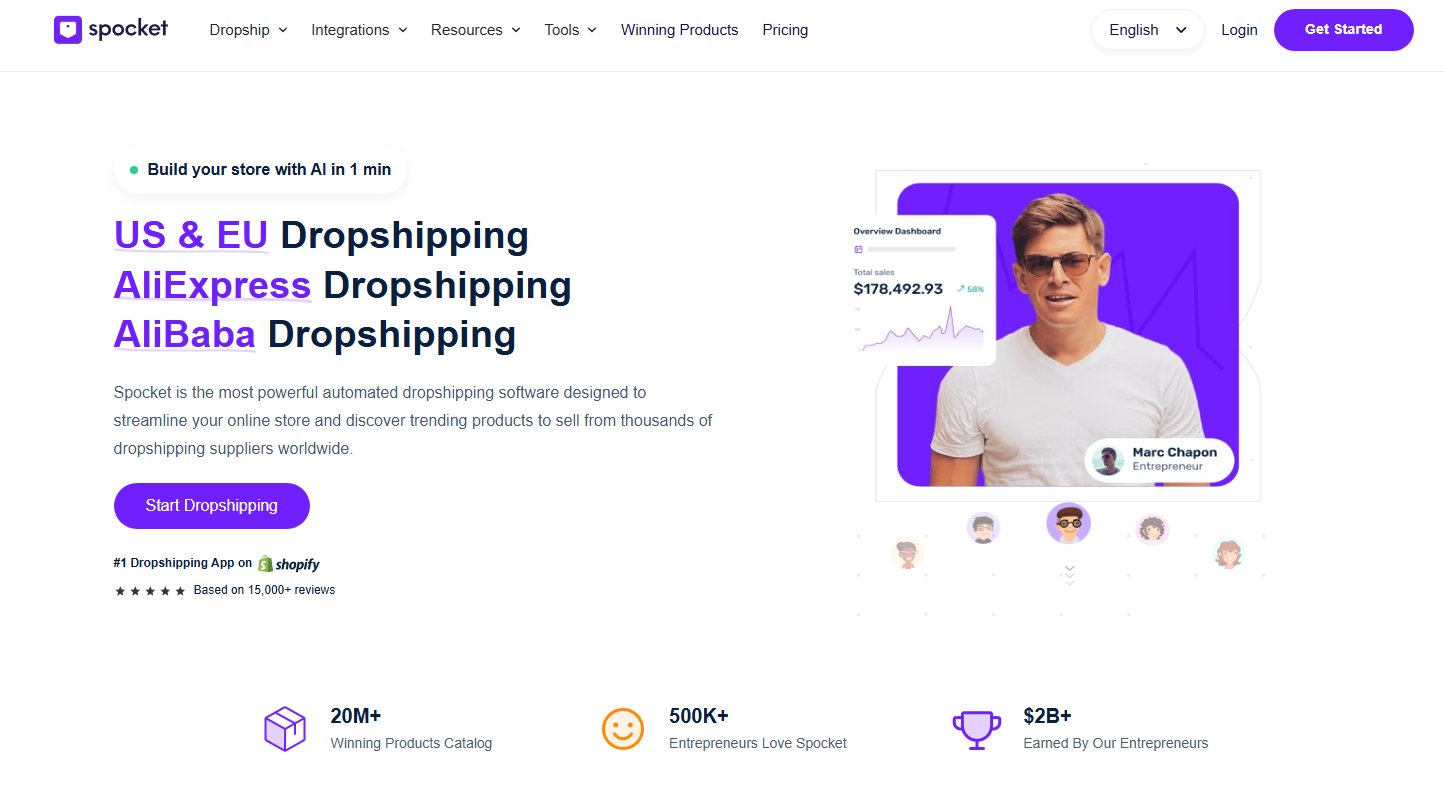
Best for: Fashion and semi-fine jewelry stores targeting North American or European customers who need fast delivery.
Spocket connects Shopify stores with vetted suppliers in the US and EU. For jewelry, that means fashion and semi-fine pieces with 3-7 day trackable shipping, a meaningful advantage over AliExpress alternatives with 15-25 day windows.
The Shopify integration is native. You browse, import, and route orders automatically. Pricing is higher than Asian suppliers, which limits margins on lower-ticket pieces. Where Spocket makes economic sense is semi-fine jewelry ($30-$80 retail) where you can set prices that support the supplier cost and still convert.
Shipping: 3-7 days to US/EU. Pricing: Free plan available, paid from $39.99/month.
2. CJDropshipping
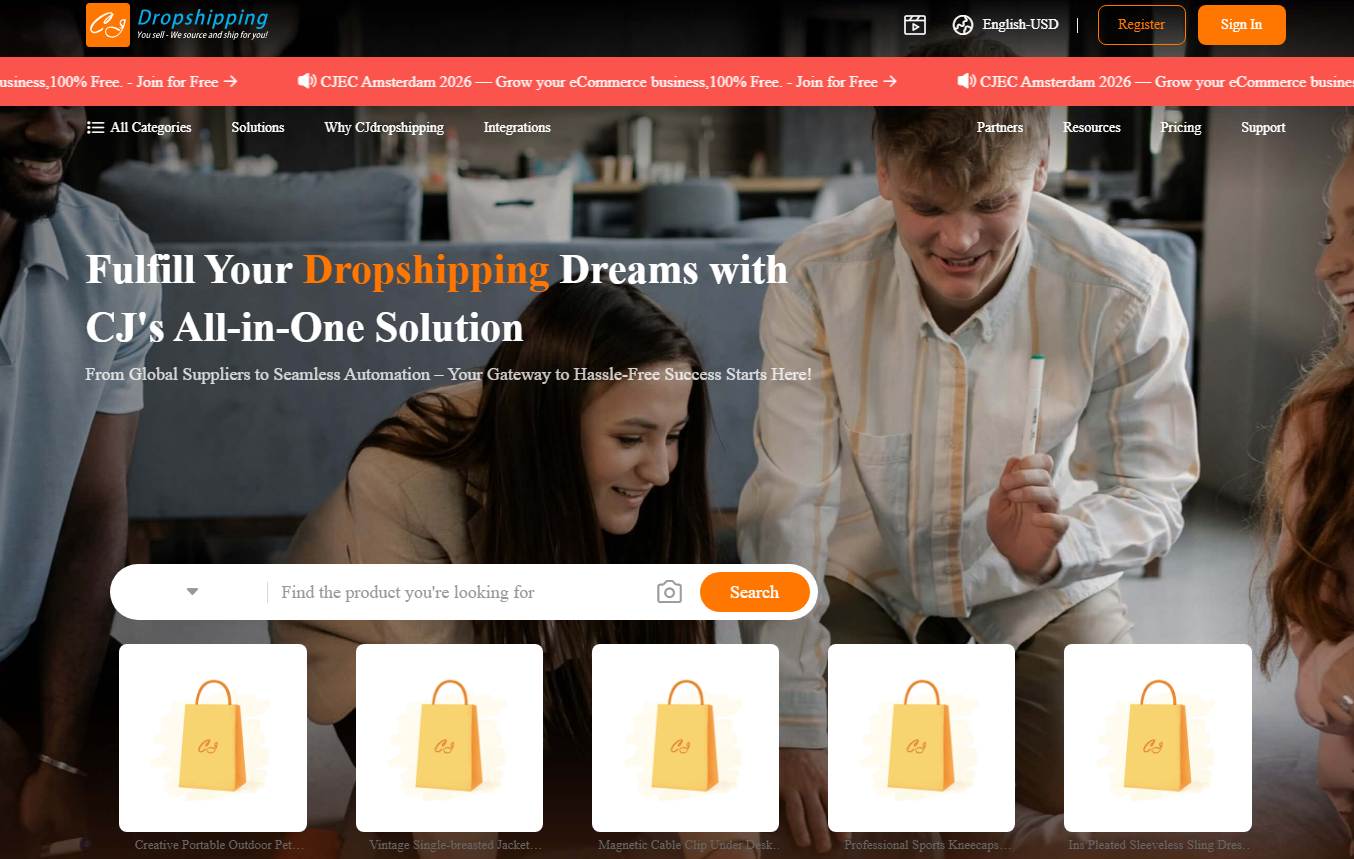
Best for: Stores that want the widest product selection across jewelry styles and price points with fulfillment automation.
CJDropshipping is one of the most comprehensive platforms available to Shopify merchants. Their jewelry catalog spans fashion rings, necklaces, earrings, bracelets, and personalized pieces at factory-direct pricing. They offer warehousing in the US, EU, and multiple other regions, enabling faster local fulfillment without the margin compression of premium-priced suppliers.
The Shopify app handles product imports, order syncing, and tracking updates automatically. Product quality varies across listings, so sample every new product before scaling. CJDropshipping is where you find volume; quality control requires active management.
Shipping: Variable by warehouse; US warehouse options available. Pricing: Free to use; product and shipping costs apply per order.
3. Nihao Jewelry
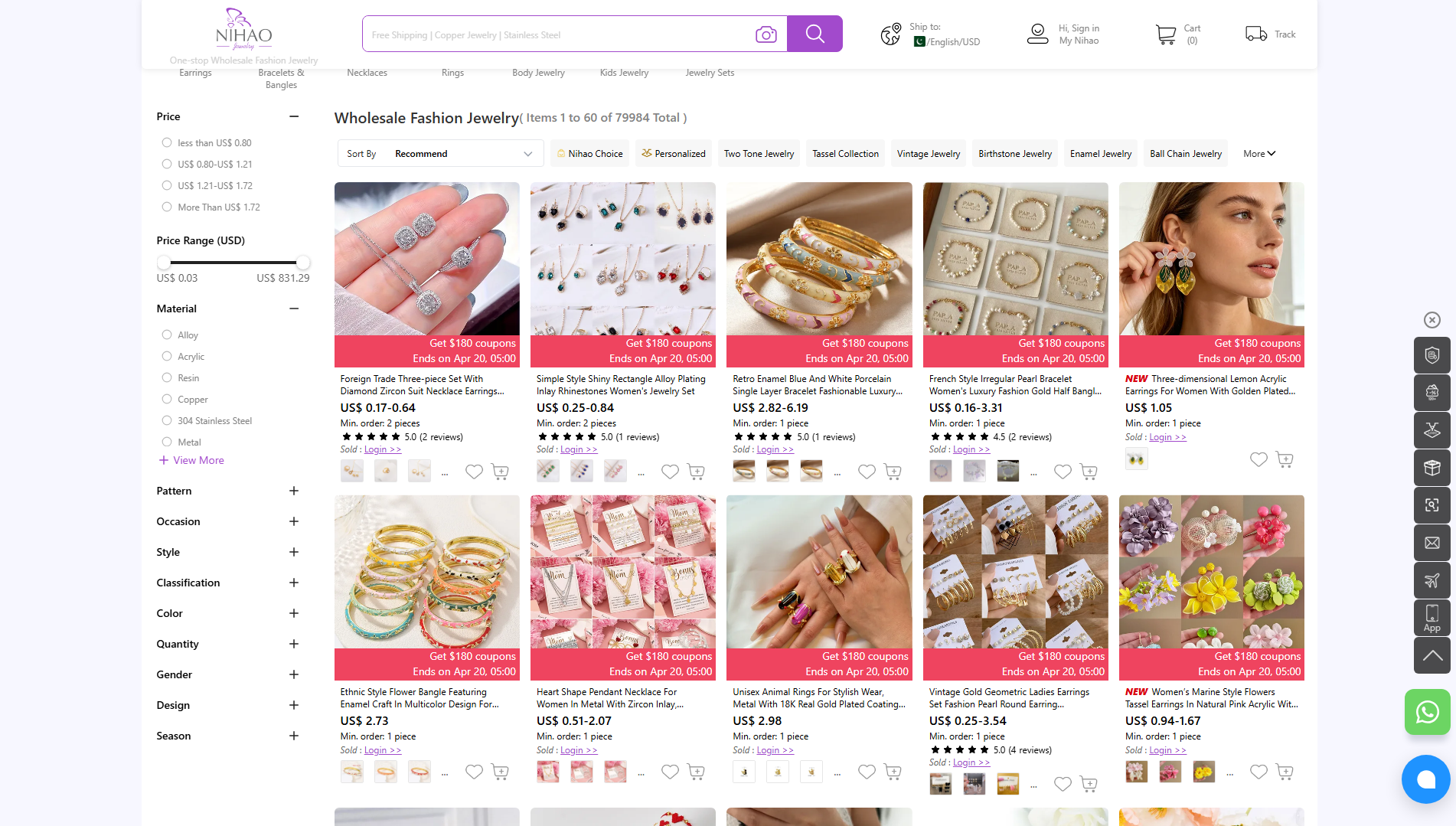
Best for: High-volume stores targeting trend-driven, budget-conscious buyers with fast-fashion jewelry.
Nihao Jewelry is a Shenzhen-based supplier with one of the widest selections of fashion jewelry for dropshippers, hundreds of styles across rings, earrings, necklaces, bracelets, and body jewelry, updated constantly to reflect current trends. No minimum order quantity. No membership fees.
For stores running TikTok or Instagram ads targeting younger buyers with trend-first pieces, Nihao is a strong sourcing option. Products start extremely low in cost, which creates room for markup even at competitive retail prices.
The tradeoff is product longevity. Fashion jewelry at this price point is not built to last years, and customer expectations need to match. Transparent product descriptions about materials and care help manage returns.
Shipping: Ships globally from China. Pricing: Free to use, no MOQ.
4. Syncee
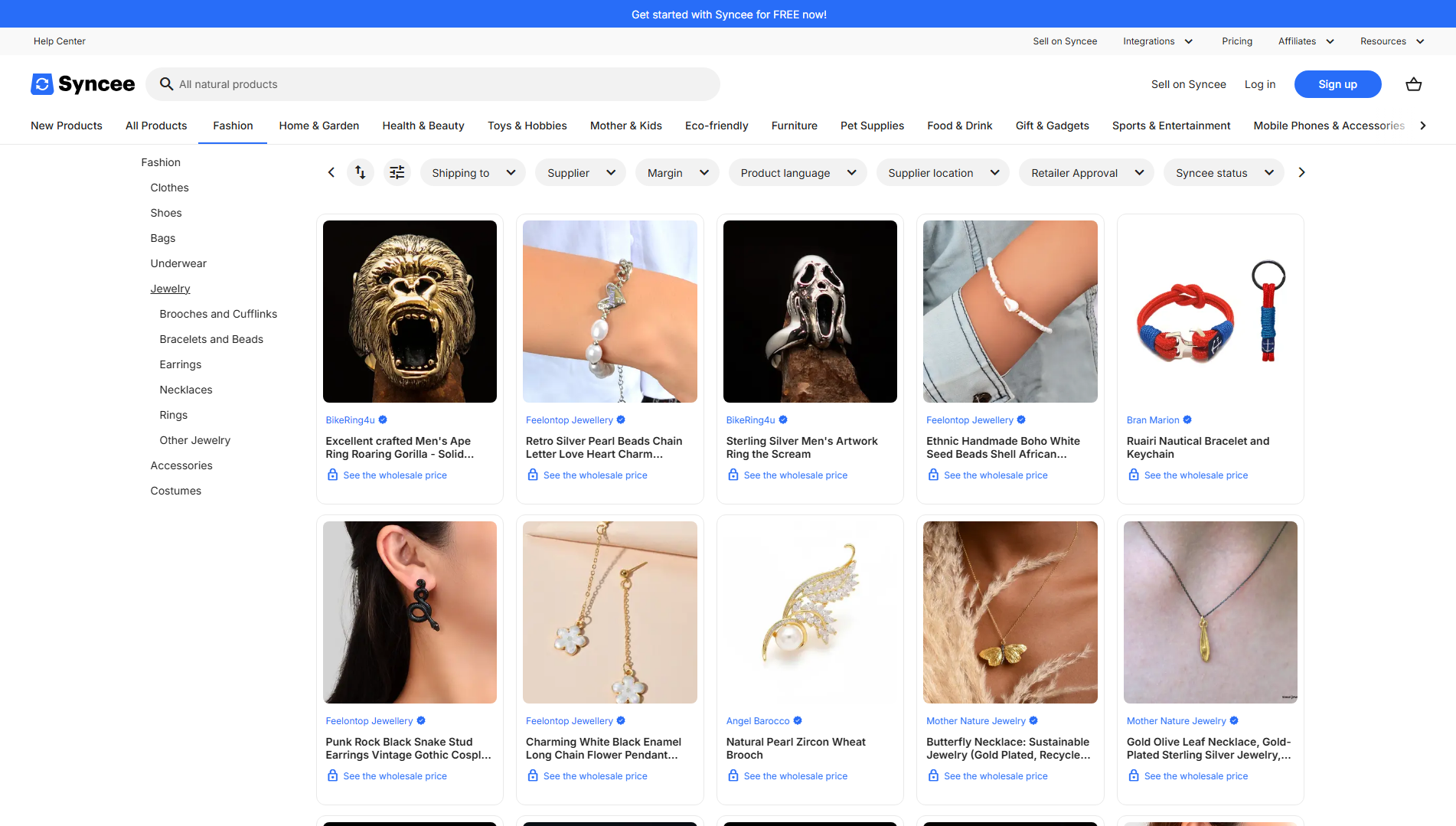
Best for: Stores managing multiple suppliers or wanting real-time inventory sync without manual updates.
Syncee connects Shopify stores to global and US-based wholesalers with a strong jewelry category. The standout feature is automation: real-time inventory sync, bulk product uploads, automatic price updates, and order routing. For merchants scaling beyond a handful of products, manual inventory management becomes a serious bottleneck. Syncee removes it.
Many suppliers on Syncee are also wholesalers, giving merchants the option to start with dropshipping to test products, then transition to wholesale for better margins once demand is proven.
Pricing: Free plan available; paid plans from $29/month.
5. Richard Cannon Jewelry (RC Jewelry)
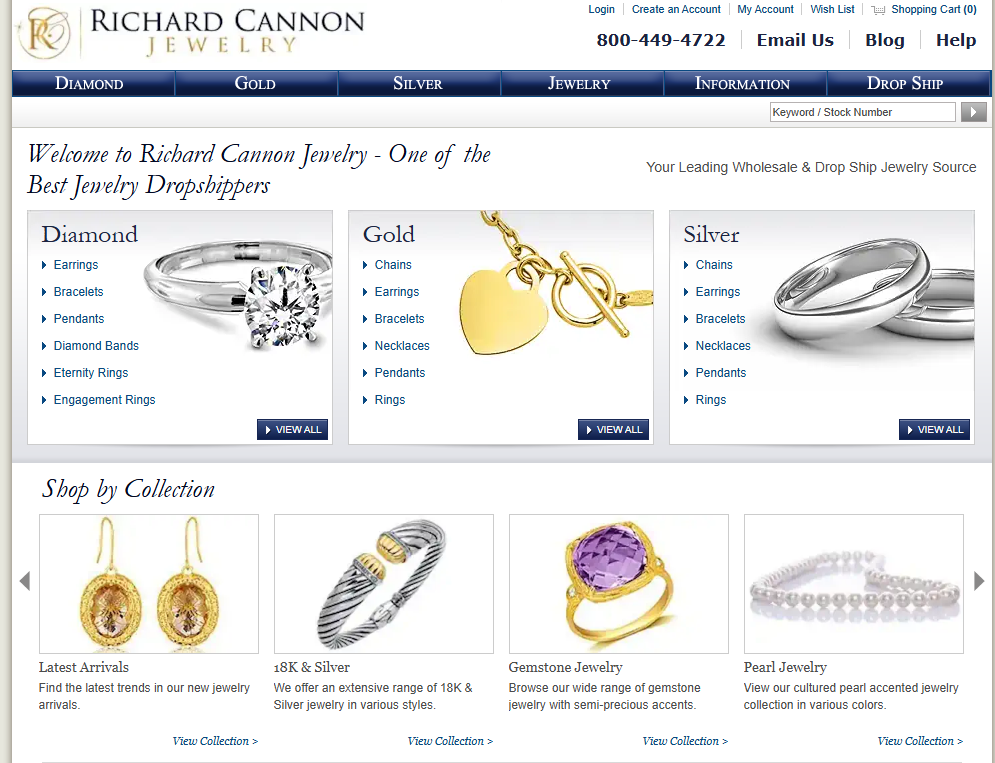
Best for: Stores targeting the mid-to-fine jewelry segment with US-based quality, gold, silver, bridal, and gemstone pieces.
Richard Cannon Jewelry is a US-based manufacturer with a B2B dropshipping program built for serious ecommerce sellers. Their catalog covers gold, silver, gemstone, and bridal jewelry at higher purchase consideration and retail price points.
The dropship program offers 95%+ fulfillment rates, no minimum orders, and real-time Shopify-compatible inventory feeds. Shipping is US domestic, with customization and branding options available for established sellers. For stores operating in the $80-$300 price range with buyers who care about quality and provenance, Richard Cannon is a credible supplier with genuine brand authority.
Pricing: $29.99/month for the dropship program; $1 trial for the first month.
6. Trendsi
Best for: Stores that want regularly refreshed, trend-forward fashion jewelry with US-based shipping.
Trendsi focuses specifically on fashion-forward, ready-to-sell inventory with US-based shipping and a catalog that updates frequently to track current demand. Their jewelry selection is curated rather than exhaustive, fewer choices, but choices that are already vetted for current trend relevance.
The Shopify integration is direct, with clean product import including photos, descriptions, and pricing. For merchants who don’t want to research and vet products from scratch, Trendsi reduces the upfront curation work considerably.
Pricing: Free to use. Products and shipping costs apply.
7. BrandsGateway
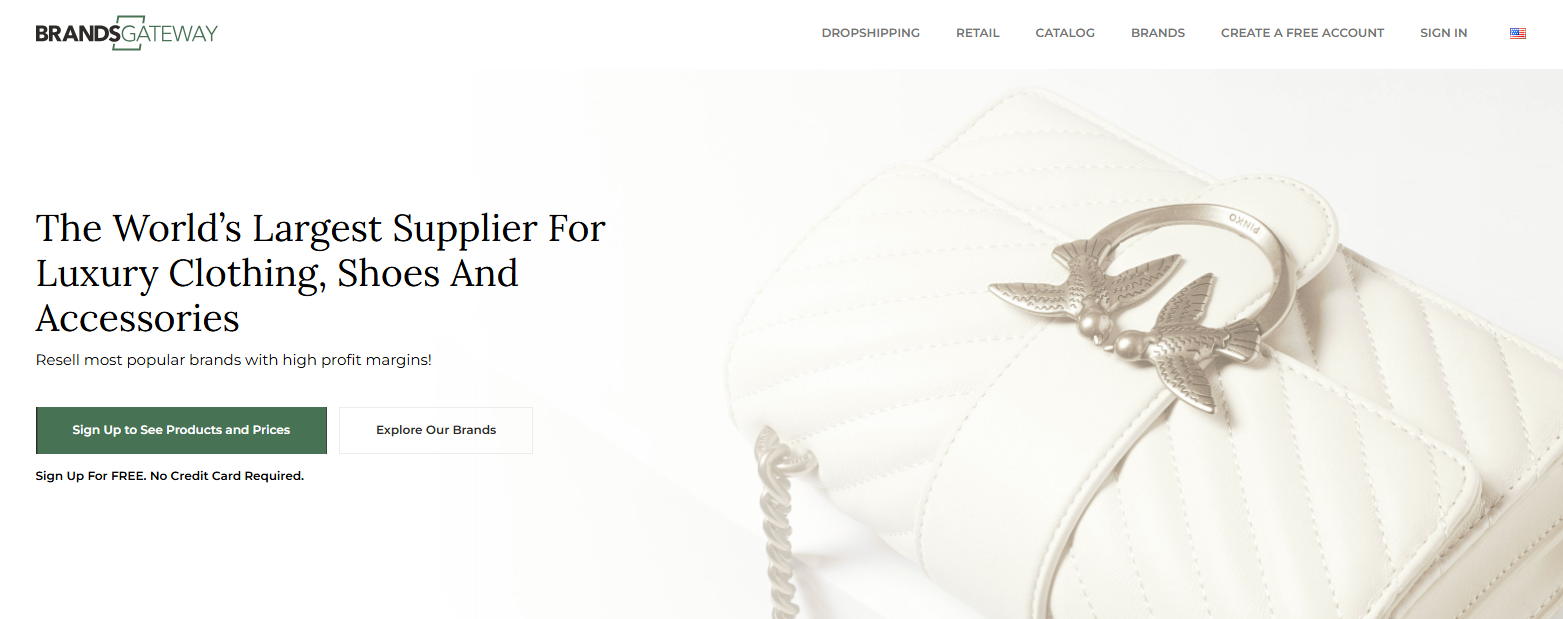
Best for: Stores targeting premium buyers who want recognizable or designer-adjacent jewelry brands.
BrandsGateway is a B2B luxury dropshipping platform with over 100 jewelry brands, weekly stock updates of 250+ new arrivals, and shipping to 170+ countries in 3-7 days. For stores positioned in the luxury or premium segment, BrandGateway provides branded product access without wholesale minimums.
The subscription cost is higher than others on this list and only makes economic sense at price points where the brand premium justifies it. For fashion jewelry stores, it’s expensive overhead. For premium positioning, it’s a genuine differentiator.
Pricing: Subscription-based; higher tier pricing. Shipping: 3-7 days globally.
8. oNecklace
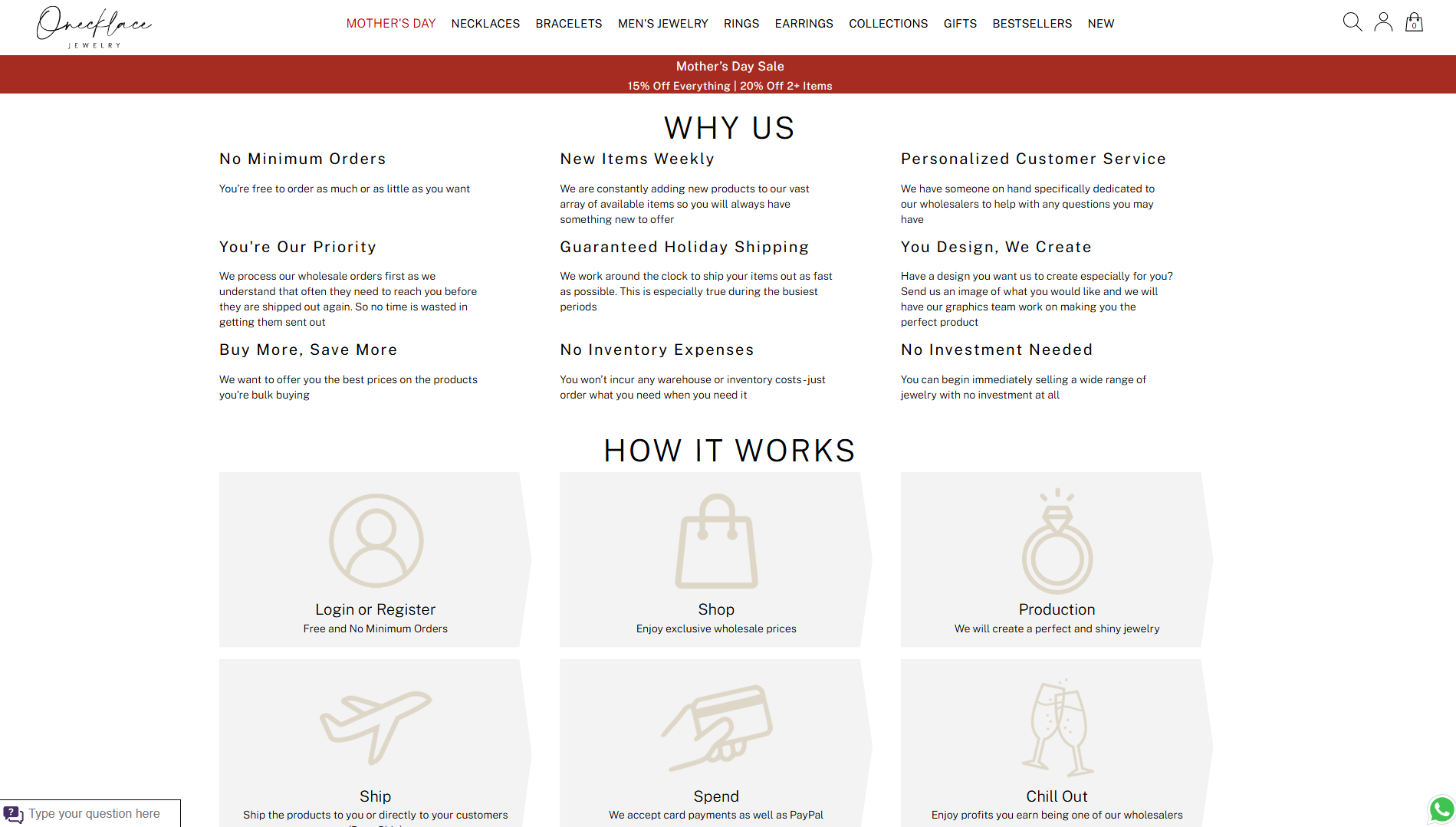
Best for: Stores that want to specialize entirely in personalized jewelry with strong AOV.
oNecklace focuses on custom name necklaces, initial pendants, and personalized pieces. This is a narrower supplier than the others, but the focus is the point. Personalized jewelry sells at a premium, generates strong purchase intent, and produces repeat buyers who return for gifts.
Personalization is handled on the supplier side. You collect order details from your customer and pass them through. Production takes a few extra days, so communicate shipping windows clearly and build that into your product pages.
9. PrintKK
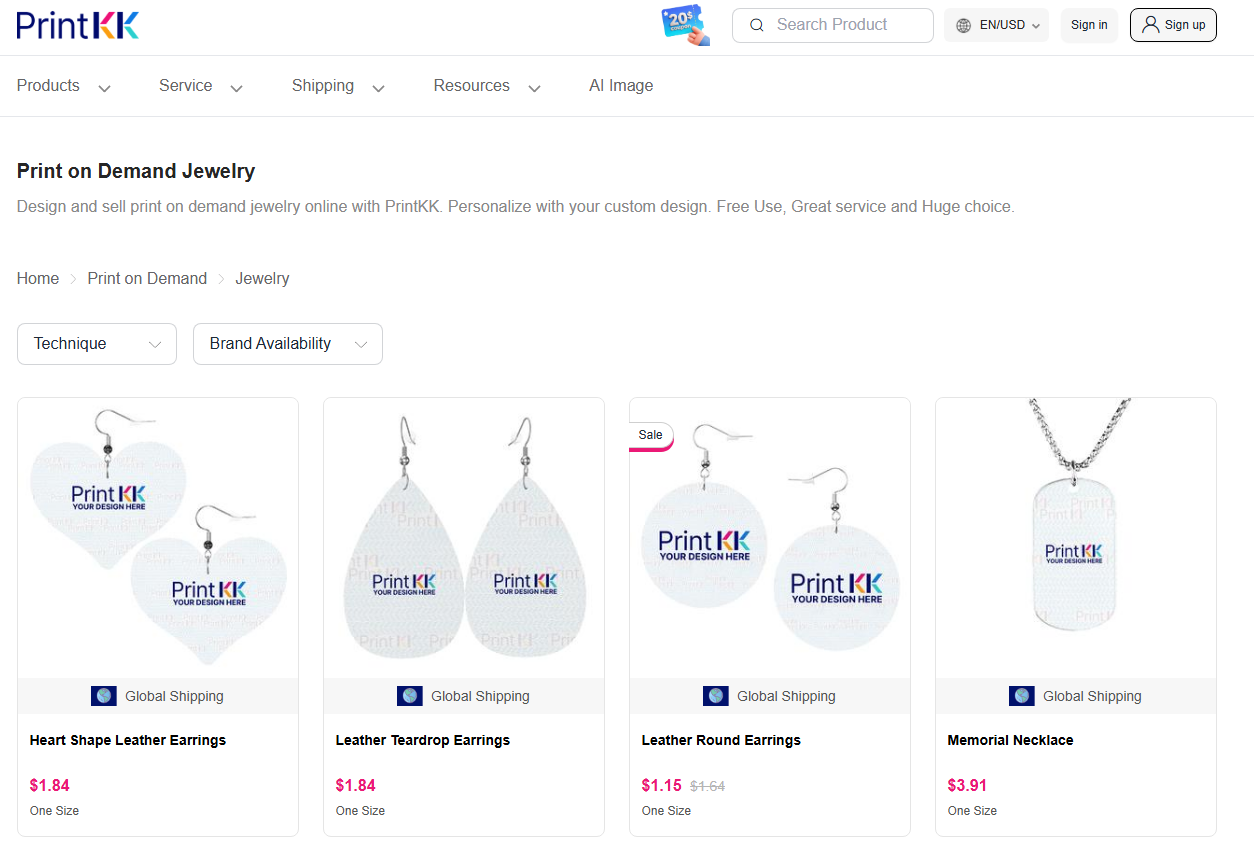
Best for: Stores that want print-on-demand, unique designs with zero inventory risk.
PrintKK offers print-on-demand jewelry, customized necklaces and earrings where you supply the design and they handle production and fulfillment. This is the highest-differentiation model on this list and the highest upfront creative investment. You need designs or design concepts before you can sell.
The advantage is zero competition on your specific products. If your design is unique, you own that product. Production timelines are longer than stock dropshipping, but the margin potential on well-branded custom jewelry is strong.
Pricing: Free to start; production costs apply per order.
10. JGoodin (J. Goodin)
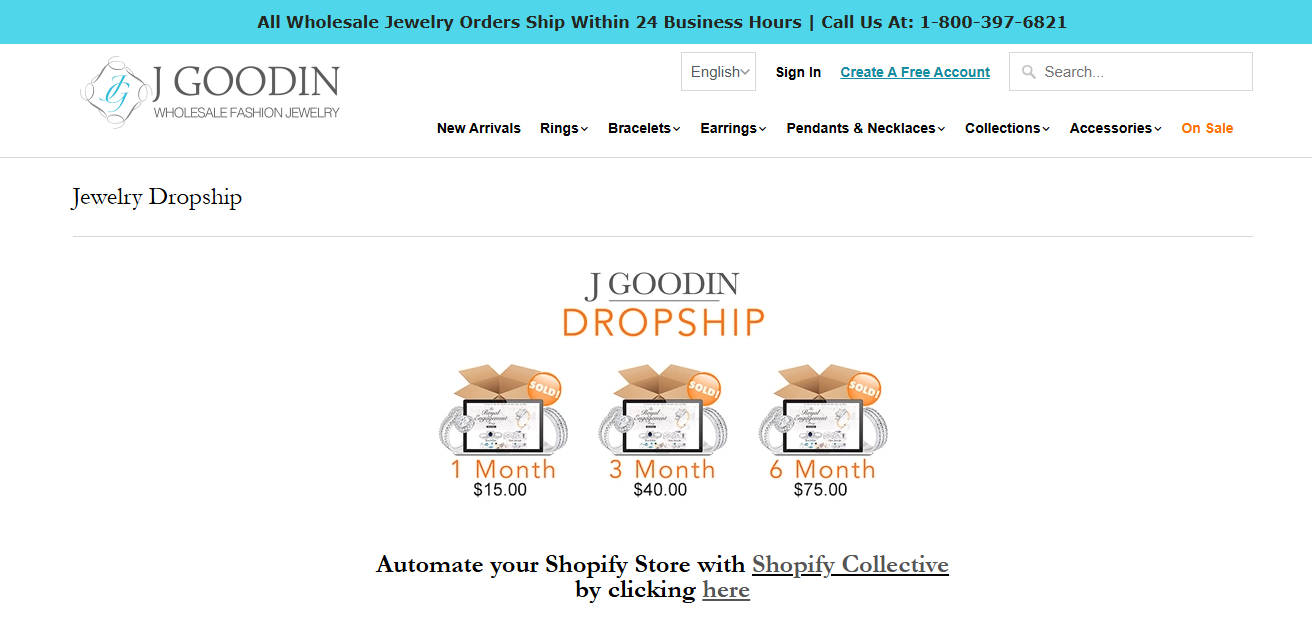
Best for: US-based stores wanting premium sterling silver and cubic zirconia jewelry at competitive wholesale pricing.
JGoodin has 30+ years in the US jewelry market and 3,000+ original designs in silver, gold-plated, stainless steel, and rhodium-plated options. Their dropship program is built specifically for Shopify and major marketplace sellers, with feeds that integrate directly.
Pieces are designed to offer the look and feel of fine jewelry at fashion jewelry price points. For stores that want to bridge the gap between budget fashion and fine without sourcing from overseas, JGoodin is a consistently solid option.
Supplier Comparison Table
| Supplier | Best For | Shopify Integration | Shipping | Starting Cost |
|---|---|---|---|---|
| Spocket | US/EU fast shipping, semi-fine | Native app | 3-7 days US/EU | $39.99/mo |
| CJDropshipping | Catalog depth and automation | Native app | Variable | Free |
| Nihao Jewelry | Budget fashion, high volume | Import tools | Ships from China | Free, no MOQ |
| Syncee | Multi-supplier automation | Native app | Variable | $29/mo |
| Richard Cannon | US fine and bridal jewelry | CSV/XLS feeds | US domestic | $29.99/mo |
| Trendsi | Trend-ready fashion jewelry | Native app | US-based | Free |
| BrandGateway | Luxury and branded jewelry | Integration | 3-7 days global | Subscription |
| oNecklace | Personalized name jewelry | Manual | Variable | Per order |
| PrintKK | Print-on-demand custom designs | Native app | Variable | Per order |
| JGoodin | Premium silver and CZ jewelry | Platform feeds | US domestic | Per order |
Where to Sell Your Jewelry (Beyond Your Shopify Store)
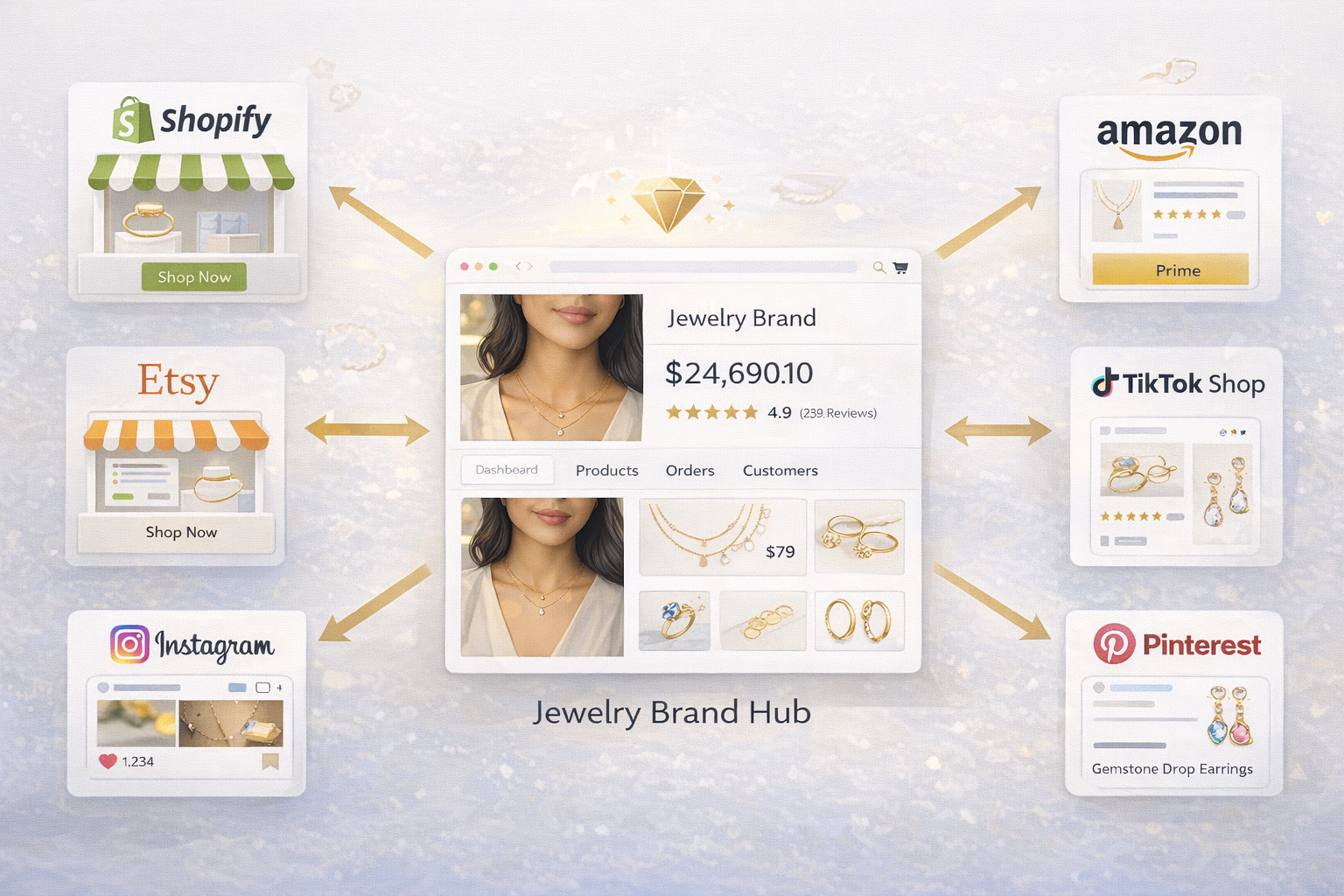
Shopify is the right foundation. You control the experience, avoid marketplace fees, and own your customer relationships. But traffic does not come for free, and a multi-channel presence compounds your reach.
Etsy is the strongest secondary channel for personalized and handcrafted jewelry. Buyers on Etsy search actively for unique pieces with high purchase intent. Etsy’s search algorithm rewards listings with strong photo quality and keyword-rich titles, both of which you should be building into your Shopify store already anyway.
Amazon works well for mid-range jewelry with strong review counts. The trust infrastructure is built in. Referral fees for jewelry run around 20%, so it works better at higher ticket prices where the margin absorbs the fee.
TikTok Shop is where fashion jewelry is discovered in 2026. 28% of Gen Z jewelry discovery happens via social platforms, and TikTok is where that discovery is disproportionately happening. Short-form video showing jewelry worn, layered, or styled is the highest-performing format. TikTok Shop closes the discovery-to-purchase loop inside the app.
Pinterest drives high-intent traffic at lower cost than paid social. Users save jewelry images to boards for future occasions, weddings, anniversaries, gift ideas. Purchase intent is delayed but strong when it converts. A consistent pinning strategy builds a long-term organic traffic channel.
How to Build a Jewelry Store That Actually Converts
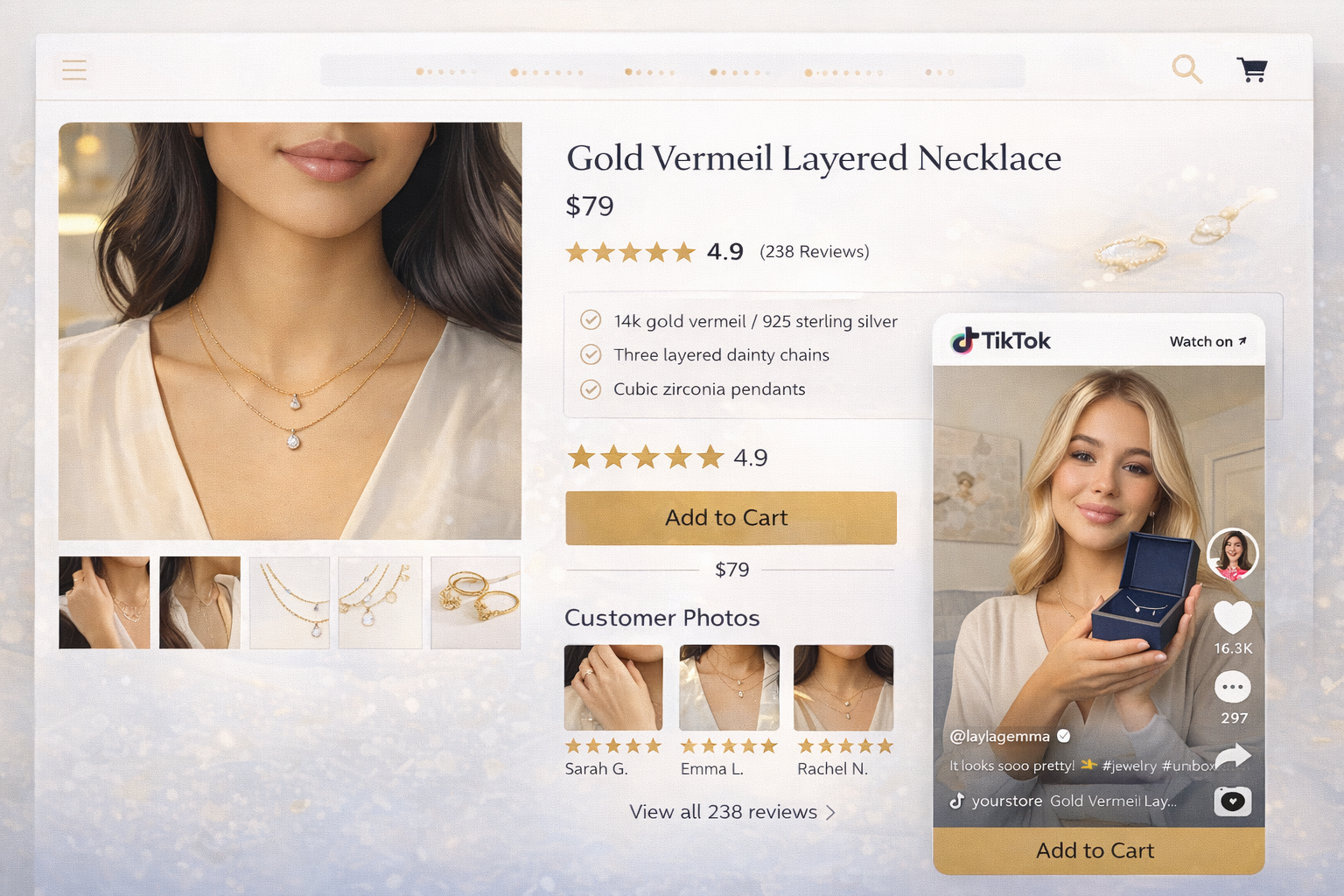
Most jewelry Shopify stores look identical. Generic theme, white background photos, copy-pasted supplier descriptions, and no reviews. Here’s what separates stores that convert from stores that don’t.
Own your visual identity. Pick a palette, a font, and a photography style and stay consistent. Jewelry is a visual category. If your homepage looks like a dropshipping template, buyers sense it immediately. Lifestyle imagery showing pieces worn on real people consistently outperforms white background photography at the top of the funnel.
List materials clearly. Jewelry buyers are rightly skeptical. They have been burned by tarnishing, color changes, and misrepresented metals. Listing exact materials, 925 sterling silver, 14k gold-filled, 316L stainless steel, 18-micron gold plating, builds credibility. Suppliers who provide certificates for moissanite or gemstones give you additional proof points to feature.
Show it worn. 60% of online jewelry buyers hesitate without seeing a piece in context. If your supplier does not provide lifestyle photos, source or create your own. The image of a necklace on someone’s neck converts more than five white-background shots of the same piece.
Price for your positioning, not just your cost. New jewelry dropshippers often price too low because they’re uncomfortable with the markup. A well-branded silver necklace that costs $8 to source is not a $16 product. It’s a $38 product if your store looks premium and your reviews are real.
Build in urgency without being dishonest. Low stock indicators for genuinely limited pieces, gift occasion copy (“perfect for Mother’s Day” or “last day of guaranteed delivery”), and season-specific framing create real urgency without fabricating scarcity.
The Trust Gap: Why Most Jewelry Stores Don’t Convert
Here’s the honest problem I see with most jewelry stores. It’s not a product problem.
Jewelry is a high-consideration purchase. People inspect pieces in physical stores. Online, that tactile confidence doesn’t exist. The customer is purchasing on faith, faith that the piece matches the photos, that the quality is real, and that you’ll make it right if something is wrong.
The stores that close this gap don’t just have good products. They have content that makes visitors believe before they buy.
That means real customer photos in reviews. Video of the piece being worn. TikTok unboxings from actual buyers. Google Reviews embedded on the product page. An Instagram Reel showing how a necklace looks when layered. Not buried in a reviews section at the bottom. Right there on the page, next to where the decision happens.
I’ve seen stores significantly improve their conversion rate simply by embedding real social proof content directly on the product page. A TikTok of a customer wearing the piece. A Google Review widget showing ratings. An Instagram Reel with styling context. Placed next to the add-to-cart button.
That’s exactly where EmbedAny becomes practical for jewelry stores. It’s a Shopify app that lets you embed content from 800+ platforms, TikTok videos, Instagram Reels, YouTube demos, Google Reviews, Trustpilot widgets, directly onto any Shopify page by pasting a URL. No iframe code. No developer. Just paste the link, and it renders as a live interactive widget.
For jewelry stores specifically, the most effective uses I’ve seen:
- Embedding a TikTok of a customer unboxing your piece directly below the product photos
- Adding a Google Reviews widget on the homepage showing real ratings, without needing a third-party review app
- Embedding an Instagram Reel showing the necklace being layered, giving buyers styling context on the product page itself
- Placing a Trustpilot widget next to the checkout button on the cart page to reduce abandonment
It works because it closes the trust gap with real people, not marketing copy. In jewelry, real people wearing real products are the most persuasive asset you have.
You can read more about adding social proof content to your Shopify store in our guide on how to add an Instagram feed to Shopify. If your store is already getting traffic but not converting it, the guide on why your Shopify store is not making sales covers the specific fixes that work most consistently across ecommerce stores.
Profit Margins in Jewelry Dropshipping: The Real Numbers
Let me be specific here rather than give you the optimistic version.
Gross margins in jewelry dropshipping run 60-85% on paper. The difference between a $10 supplier cost and a $45 retail price is real. Net margin after advertising, platform fees, refunds, and payment processing is where reality shows up. For most jewelry dropshippers running paid social, net margins land at 10-30%.
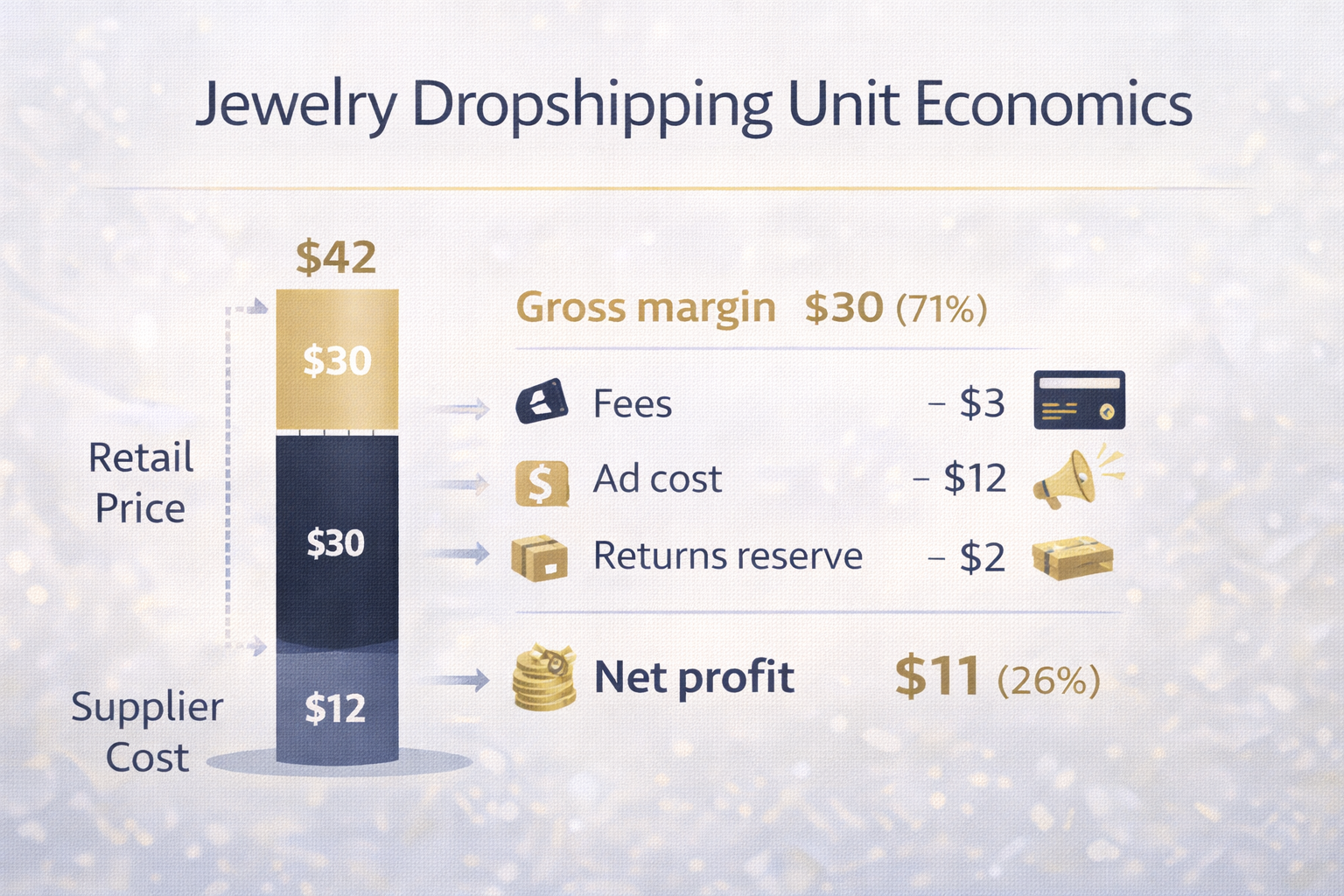
A realistic unit economics example:
| Line Item | Amount |
|---|---|
| Supplier cost (including shipping) | $12 |
| Retail price | $42 |
| Gross margin | $30 (71%) |
| Shopify and payment fees | $3 |
| Ad cost per acquisition | $12 |
| Returns reserve | $2 |
| Net profit per unit | $11 (26%) |
That’s healthy. But it requires your advertising to be efficient. When customer acquisition cost climbs, which it does when you scale without brand recognition, the margin compresses fast.
The levers that reliably improve jewelry dropshipping economics:
Sell sets, not singles. A three-piece layering necklace set at $68 costs $22-$24 to source. Your ad cost is the same whether you sell one piece or three. The AOV increase falls almost entirely to margin.
Private label when you’re ready. Custom packaging, a branded insert card, and your logo on the box costs $1-2 per order. It reduces returns, improves reviews, and supports a brand premium. Most suppliers on this list support some form of private labeling at scale.
Build returning customers. Jewelry stores where 30-40% of revenue comes from returning customers see marketing costs stabilize and net margins expand. A post-purchase email series, follow-up, styling suggestions, birthday reminder, “complete the look” six weeks later, costs nearly nothing per send and converts at multiples of cold traffic.
Personalization as upsell. If you offer custom engraving or birthstone options, charge for them. Personalized pieces command a 41% higher median order value. If you’re not pricing that premium into your offering, you are leaving real money behind.
FAQs
is jewelry dropshipping still profitable in 2026
Yes. Jewelry remains one of the highest-margin dropshipping niches because of its strong perceived value relative to sourcing cost. Gross margins of 60-80% are achievable on fashion jewelry. Net margins after advertising and fees typically land at 10-30%, depending on customer acquisition efficiency. The key is choosing specific positioning rather than competing on price against generic stores.
what is the best jewelry dropshipping supplier for shopify in 2026
It depends on your store’s positioning. For US-based fast shipping on fashion pieces, Spocket and Trendsi are the strongest options. For catalog depth and automation at scale, CJDropshipping handles volume well. For fine and premium silver jewelry from a US manufacturer, Richard Cannon Jewelry is the most credible option. For personalized pieces with high AOV, oNecklace specializes specifically in that category.
how do i find winning jewelry products to dropship
Look first at what’s trending on TikTok and Pinterest in the jewelry category, both platforms surface real consumer demand before it shows up in supplier catalogs. Search hashtags like #minimalistjewelry, #statementearrings, and #layerednecklaces. Check Etsy bestseller lists in jewelry. Then source the style from your supplier before your competitors identify the same trend. Product cycles in jewelry move fast in 2026.
what jewelry niches work best for shopify dropshipping
Personalized jewelry (name necklaces, birthstone pieces, engraved items) has the highest conversion potential and commands premium pricing. Minimalist everyday jewelry targets consistent buyers who return often. Statement and chunky jewelry performs strongly with social content. Lab-grown diamond and moissanite jewelry is growing rapidly as buyers trade up from fashion pieces without the natural diamond price.
how long does jewelry dropshipping shipping take
It depends entirely on your supplier’s warehouse location. US-based suppliers like Richard Cannon and Trendsi ship domestically in 3-7 business days. Suppliers fulfilling from China typically take 10-20 days for standard shipping or 5-10 days for expedited. Be transparent about timelines in your store. For gift-occasion purchases, shipping confidence is a primary conversion factor.
can i sell jewelry on etsy and shopify at the same time
Yes, and many successful jewelry merchants run both. Shopify gives you brand control and better margins. Etsy gives you built-in search traffic from buyers already looking for jewelry. The combination works especially well for personalized jewelry, which is one of Etsy’s highest-demand categories. Manage listings on both and drive post-purchase repeat business through Shopify via email marketing.
how do i make my jewelry shopify store look premium
Consistent visual identity is the foundation: one color palette, one font pair, and lifestyle photography showing pieces worn on real people. Clear material descriptions build trust. Fast page load times matter more than most merchants realize. Social proof in the form of customer photo reviews, TikTok content, and embedded review widgets signals that real buyers have bought and loved the product. Pricing that reflects your quality positioning rather than racing competitors to the bottom completes the picture.
what is a realistic profit margin for jewelry dropshipping
Gross margins on jewelry typically run 60-80% after supplier cost. Net margins after paid advertising, platform fees, payment processing, and returns generally land at 10-30% for most sellers. Stores with strong brand equity, high return customer rates, and personalization upsells push closer to the 25-35% net margin range. Generic stores competing primarily on price tend toward the lower end.
how important is social proof for a jewelry shopify store
Critical. 60% of online jewelry buyers hesitate to purchase when they cannot see a piece worn in context. Review photos, TikTok testimonials, Instagram styling content, and third-party review platforms each address different parts of the trust gap. Stores with photo reviews and social content embedded directly on product pages consistently outperform stores with only text reviews or no reviews at all.
do i need a license to sell jewelry online through shopify
You generally do not need a specific jewelry license to sell fashion or costume jewelry online. However, if you sell pieces claiming to contain precious metals or certified gemstones, you need to accurately represent the materials and purity in your listings. Misrepresenting materials, claiming sterling silver when it is not, is a consumer protection violation in most jurisdictions. Verify any material claims with your supplier before listing them in product descriptions.